
Anglesey Shipwrecks
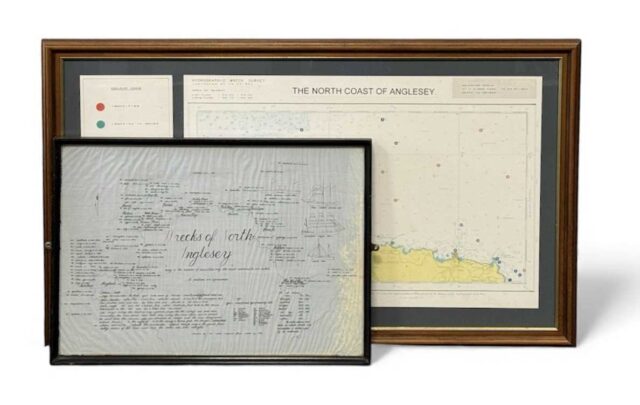
Wreck of the HMY Mary
HMY Mary was the first Royal Yacht of the Royal Navy. She was built in 1660 by the Dutch East India Company, then was purchased by the City of Amsterdam and given to King Charles II, on the restoration of the monarchy, as part of the Dutch Gift.
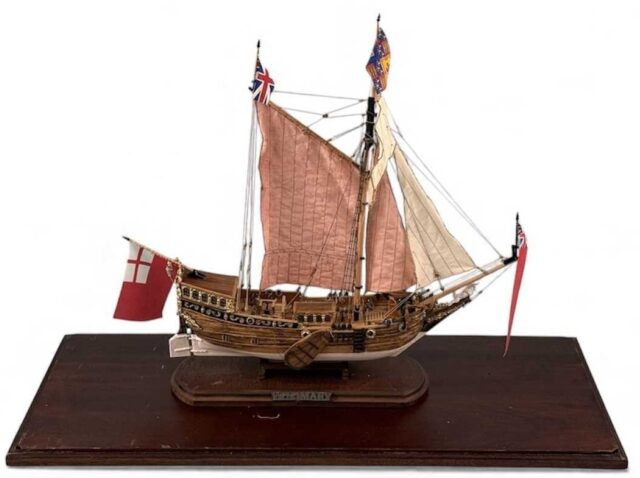
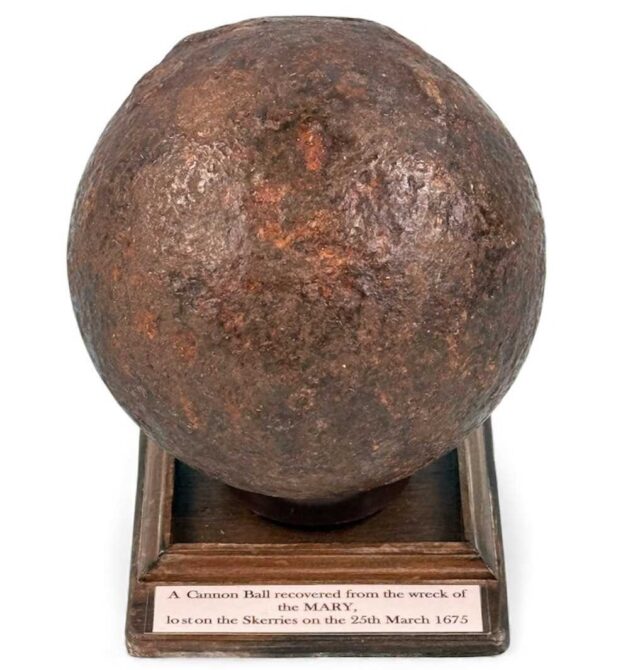
HMY Mary struck rocks off Anglesey in thick fog on 25 March 1675 while en route from Dublin to Chester. Although 35 of the 74 crew and passengers were killed as the wreck quickly broke up, 39 managed to get to safety. The remains (bronze cannon) were independently discovered by two different diving groups in July 1971. After looters started to remove guns from the site, a rescue operation was organized and the remaining guns and other artifacts were taken to the Merseyside Museums for conservation and display. After the passing of the Protection of Wrecks Act 1973, she was designated as a protected site on 20 January 1974.
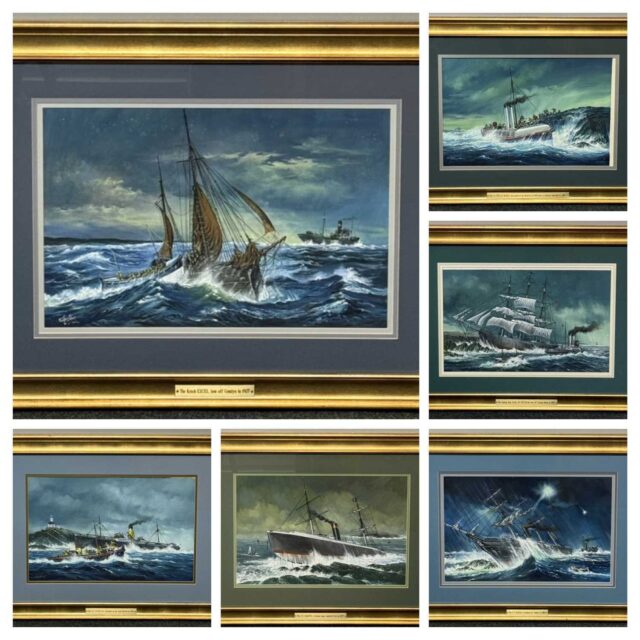
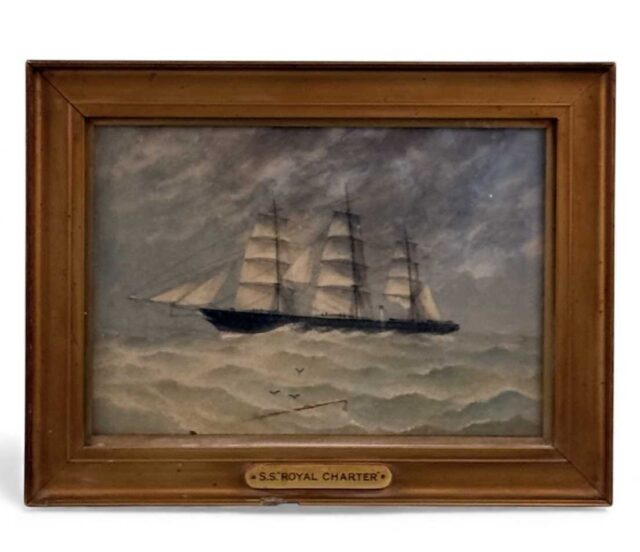
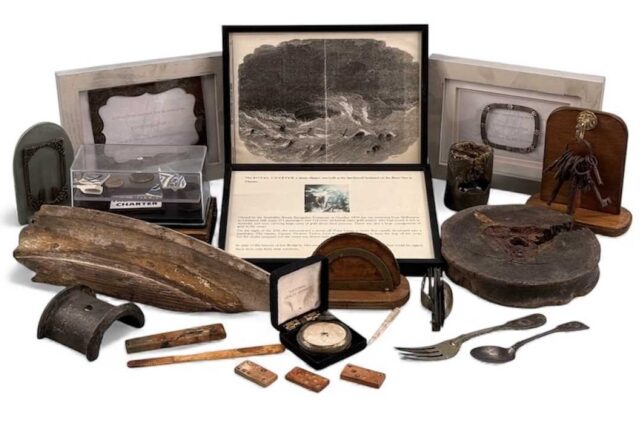
SS Royal Charter
On the night of 25-26 October 1859 an exceptional storm, considered the worst in the 19th century, hit Anglesey and the rest of Britain, with tragic consequences.
That day the steam clipper Royal Charter was making its way across the Irish Sea towards Liverpool, after a brief stop in Queenstown (now Cobh) in Ireland. It was returning from Melbourne, Australia, with around 375 passengers and 112 crew. One of the fastest ships at the time, it had left Australia on 25 August, 59 days previously.
Among the passengers were many miners returning from the Australian gold fields. In the hold were boxes full of gold, each labelled with the owner’s name and brought to the ship in Melbourne with a police escort. The contents of the boxes were worth £322,440, which in today’s money would be many tens of millions of pounds. Much more gold was being carried by the passengers themselves, in their luggage or sewn into their clothes. It was a ship of fabulous wealth.
SS Dakota
The SS Dakota, owned by the Liverpool and Great Western Steam Ship Company, was wrecked on East Mouse near Amlwch on 9 May 1877.
SS Dakota
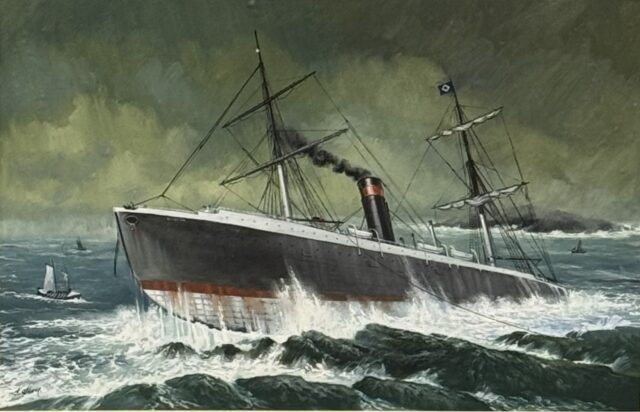
The SS Dakota, owned by the Liverpool and Great Western Steam Ship Company, was wrecked on the East Mouse near Amlwch on 9 May 1877. Built by Palmer’s Shipbuilding Company in 1874, the 4,332-ton iron-hulled passenger liner was sailing from Liverpool to New York at night in hazy conditions. Believed to be about two miles offshore, the captain ordered a course alteration to keep the ship clear of Point Lynas. The order was misunderstood in the wheelhouse, causing the ship to turn toward shore instead of away from it, and she struck the rocks near the East Mouse. All 218 passengers and 109 crew survived, along with much of the cargo, with 20 passengers rescued by the Bull Bay lifeboat Eleanor.

Castilian
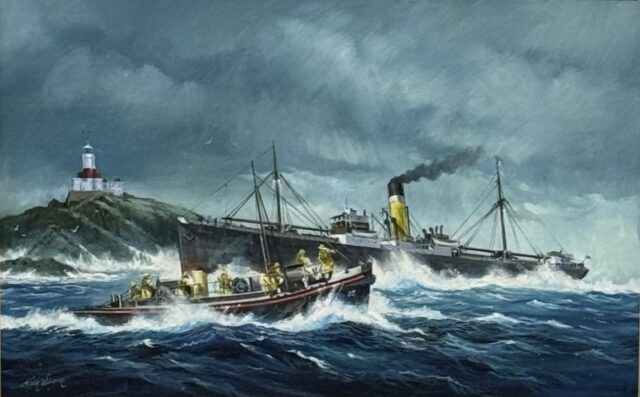
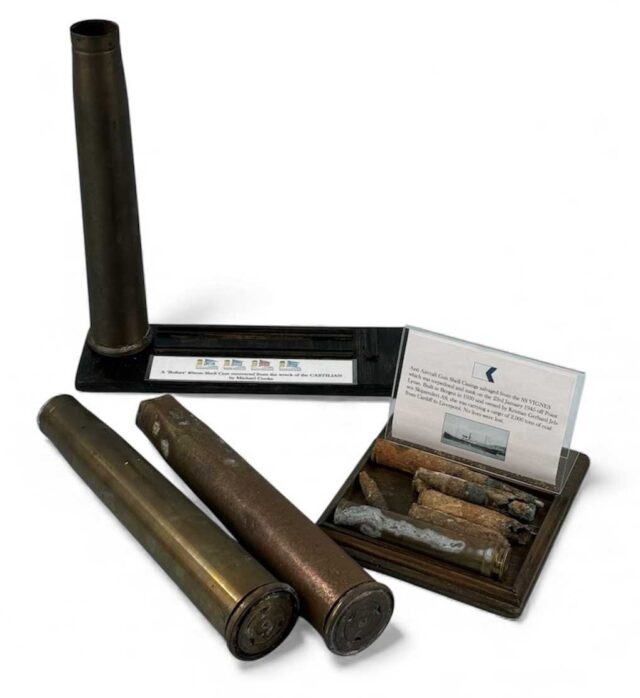
In the early hours of 12 February 1943, the SS Castilian, a 3,000-ton Ellerman Papayanni Company ship carrying munitions from Liverpool to Lisbon, sought shelter from a severe south-westerly gale near Anglesey. After her anchors failed in Church Bay, she attempted to take refuge north of Anglesey but struck the dangerous East Platters Rocks in the channel near the Skerries.
SS Castilian
£40-60
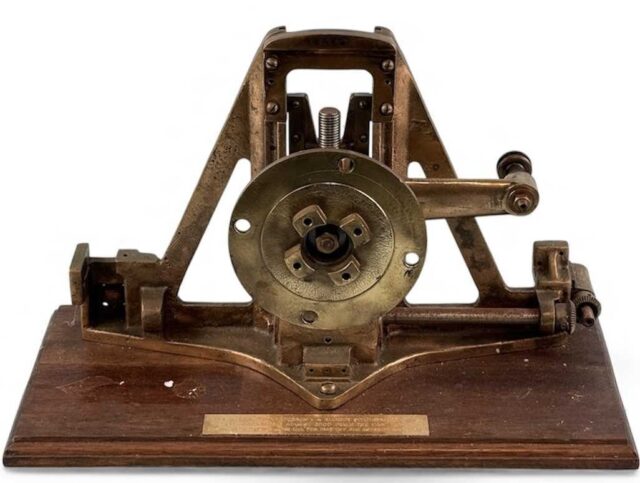
The lifeboat made further hazardous trips to assess the wreck and attempt recovery of confidential mail. Decades later, unexploded ordnance believed to be from the wreck was cleared from nearby Fydlyn Bay in 1987.
Imminent Auctions

Maw 13 Hydref 2026 10:00 YB
Colwyn Bay Monthly
Bae Colwyn
Maw 20 Hydref 2026 10:00 YB
Cardiff Monthly
Caerdydd
Cyflwyno eitemau erbyn 2/10/2026

Maw 27 Hydref 2026 10:00 YB
Chester Monthly
New Chester Saleroom
Cyflwyno eitemau erbyn 9/10/2026