

Anglesey Shipwrecks
SS Castilian, SS Vignes, Edith Owen, HMS Conway, The Royal Charter, HMY Mary, Nafsiporos, SS Abbotsford, SS Angloman, SS Apapa....
The first 181 lots of our upcoming Chester Monthly & Maritime sale offer a glimpse into the seafaring history of North Wales, featuring navigational instruments and lights, shipping line memorabilia, model ships, and items salvaged from shipwrecks along the Anglesey coastline including the vessels above.
Over the centuries, Anglesey has seen hundreds of ships lost to fierce storms and rocky shores.
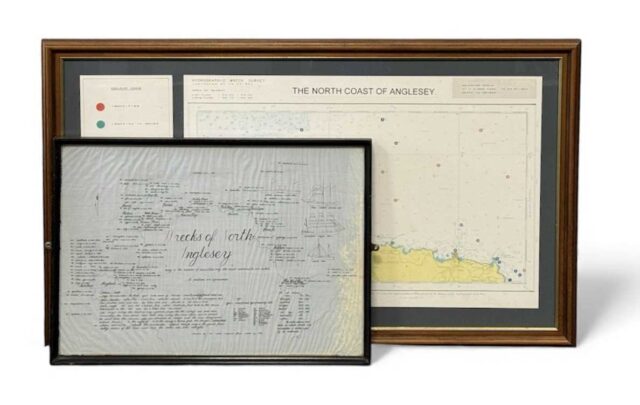
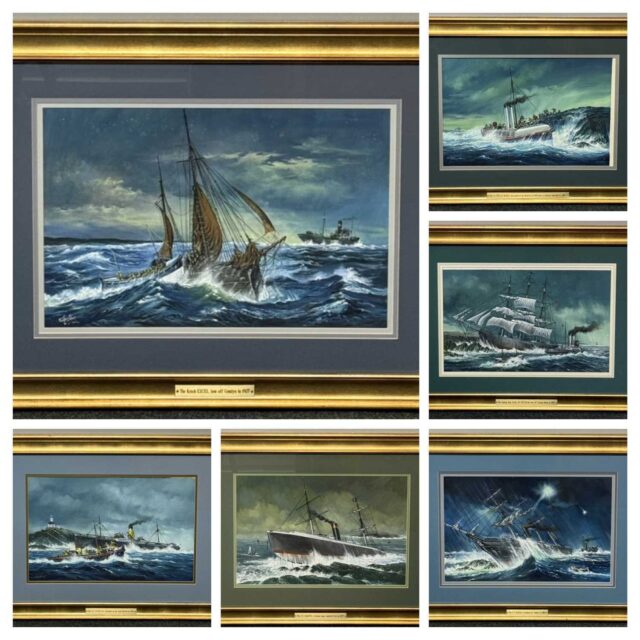
Here, we examine four shipwrecks that illustrate the region’s dramatic maritime history.
Wreck of the HMY Mary
HMY Mary was the first Royal Yacht of the Royal Navy. She was built in 1660 by the Dutch East India Company, then was purchased by the City of Amsterdam and given to King Charles II, on the restoration of the monarchy, as part of the Dutch Gift.
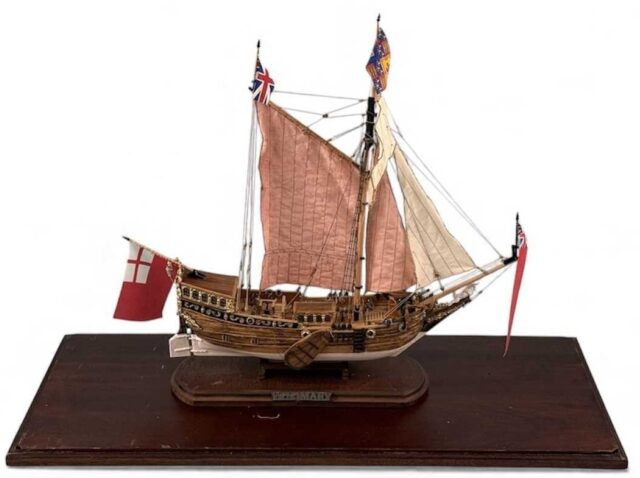
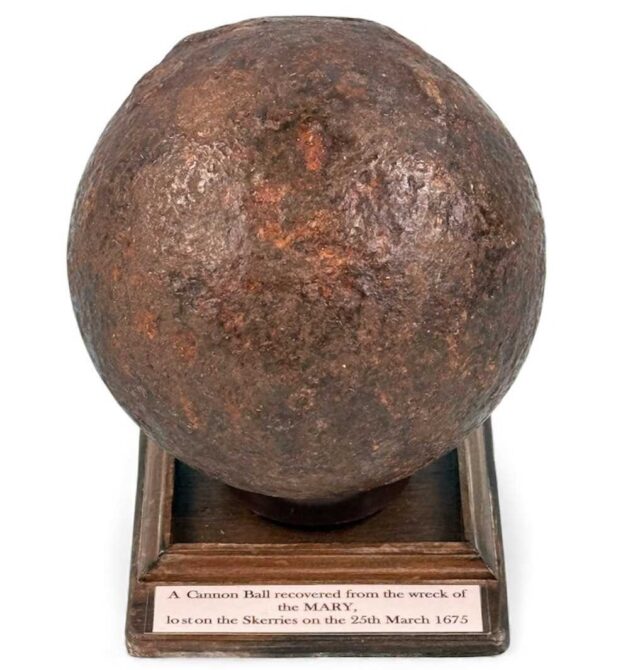
HMY Mary struck rocks off Anglesey in thick fog on 25 March 1675 while en route from Dublin to Chester. Although 35 of the 74 crew and passengers were killed as the wreck quickly broke up, 39 managed to get to safety. The remains (bronze cannon) were independently discovered by two different diving groups in July 1971. After looters started to remove guns from the site, a rescue operation was organized and the remaining guns and other artifacts were taken to the Merseyside Museums for conservation and display. After the passing of the Protection of Wrecks Act 1973, she was designated as a protected site on 20 January 1974.
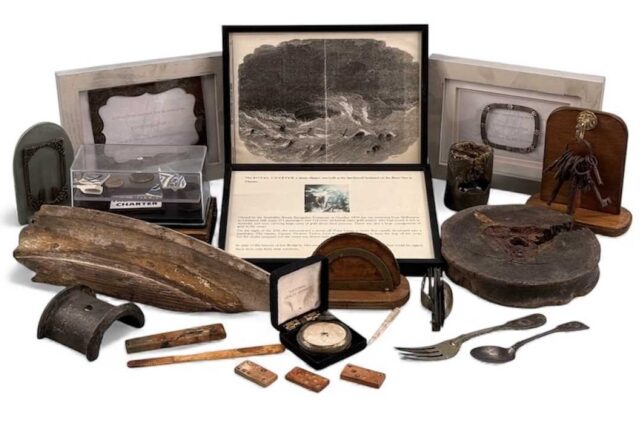
Wreck of the Royal Charter
In late October 1859 Britain was struck by a storm that caused devastation on an unprecedented scale. 133 ships were sunk and a further 90 badly damaged, while the death toll was estimated at around 800. Some victims were killed on land by falling rocks and masonry, and in just two days the storm claimed twice as many lives as had been lost at sea around the British Isles during the whole of 1858. One of the most tragic episodes of this disaster unfolded off the coast of Anglesey with the wreck of the steam clipper Royal Charter.
On 25 October 1859 the Royal Charter was crossing the Irish Sea towards Liverpool after a brief stop in Queenstown, now Cobh, in Ireland. Returning from Melbourne, she carried around 375 passengers and 112 crew. One of the fastest ships of her time, she had left Australia only 59 days earlier, unaware that she was sailing into what would later be regarded as the worst storm of the 19th century.
Many of the passengers were miners returning from the Australian goldfields. The ship was carrying boxes of gold worth £322,440, equivalent to many tens of millions of pounds today, with even more gold held by passengers themselves. It was a vessel of extraordinary wealth.
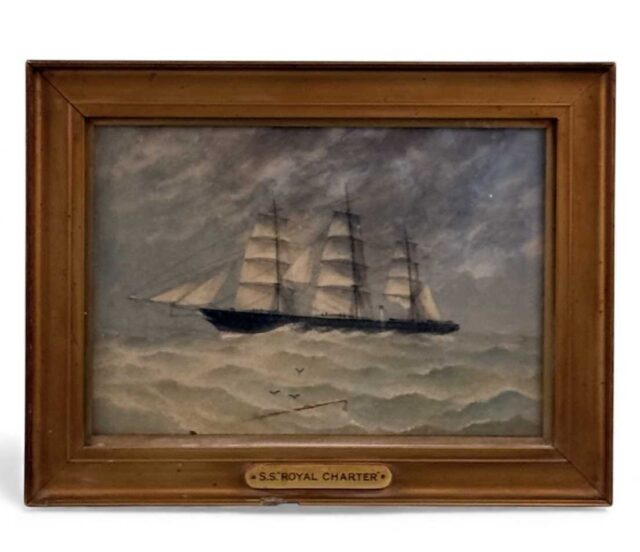
Captain Thomas Taylor, mindful of the Royal Charter’s reputation for speed, hoped to complete the journey from Queenstown to Liverpool within 24 hours. Sailing up St George’s Channel, the wind soon strengthened and turned against her. The sails were lowered and the ship continued under engine power alone. By early afternoon she was within sight of Holyhead beneath a strange, hazy sky, but with no knowledge of the approaching hurricane, the decision was taken to press on.
After rounding the northern tip of Anglesey, the Royal Charter headed east along the coast towards Liverpool. The wind shifted to the north, driving the ship towards the shore just three miles away. Gusts reached around 100mph, the rudder became ineffective, and the ship drifted helplessly towards land.
At around 11pm Captain Taylor ordered the anchors dropped. Distress signals were fired as the storm reached full hurricane force, but no help could reach them. One anchor cable snapped after two hours, the second an hour later. With the ship being driven towards the rocks, orders were given to cut away the masts and rigging, but before this could be done the Royal Charter struck a sandbank.
She came to rest at an angle in Porth Helaeth near the village of Moelfre. Although the hull was intact, the gale continued to rage, and by dawn they could see that the ship lay only 25 yards from the shore.
Villagers soon spotted the wreck. On board the ship, plans were made to send a rope ashore, which could then be used, along with a bosun’s chair, to bring passengers to safety. A Maltese seaman, Guże Ruggier, also known as Joe Rodgers, volunteered to swim the line ashore. He tied the rope around his waist and, battling heavy seas, eventually reached land, where villagers secured it and formed a human chain to assist the rescue.
However before many could be saved, the rising tide lifted the ship off the sandbank and hurled her onto the rocks. She broke in two, and most on board were drowned or smashed against the shore.
Only around 40 of the roughly 490 passengers and crew survived. All the women and children perished. As rescue preparations continued, several were swept overboard by a huge wave, and before any further attempt could be made the Royal Charter broke apart completely.
Wreck of the SS Dakota
The SS Dakota, owned by the Liverpool and Great Western Steam Ship Company, was wrecked on East Mouse near Amlwch on 9 May 1877.
SS Dakota
Keith Shone watercolour, see lot 153
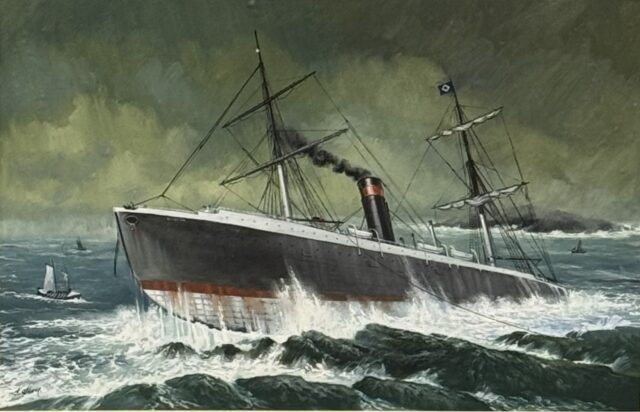
Built by Palmer’s Shipbuilding Company in 1874, the 4,332-ton iron-hulled passenger liner was sailing from Liverpool to New York at night in hazy conditions. Believed to be about two miles offshore, the captain ordered a course alteration to keep the ship clear of Point Lynas. The order was misunderstood in the wheelhouse, causing the ship to turn toward shore instead of away from it, and she struck the rocks near East Mouse. All 218 passengers and 109 crew survived, along with much of the cargo, with 20 passengers rescued by the Bull Bay lifeboat Eleanor.

Wreck of the SS Castilian
In the early hours of 12 February 1943, the SS Castilian, a 3,000-ton Ellerman Papayanni Company ship carrying munitions from Liverpool to Lisbon, sought shelter from a severe south-westerly gale near Anglesey. After her anchors failed in Church Bay, she attempted to take refuge north of Anglesey but struck the dangerous East Platters Rocks in the channel near the Skerries.
SS Castilian
Keith Shone watercolour, see lot 153
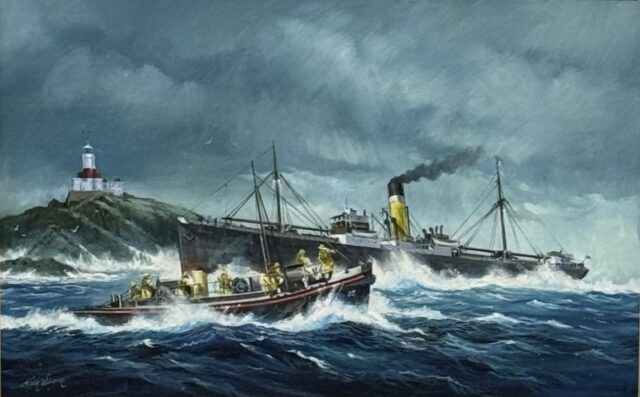
A lifeboat from Holyhead launched at 5.25am in darkness and heavy seas and located the ship aground after two hours. Despite the captain’s initial refusal to abandon ship, worsening conditions forced evacuation. All 47 crew members were rescued safely by 8.45am, with only one minor injury.
Later that afternoon, the Castilian slipped off the rocks and sank, leaving only her funnels and mast visible.
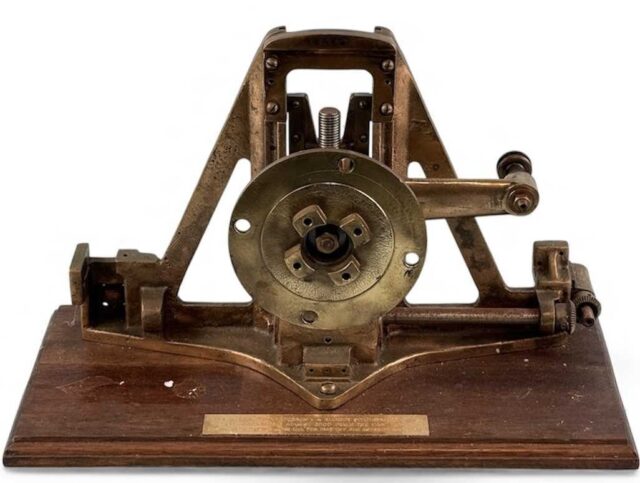
The lifeboat made further hazardous trips to assess the wreck and attempt recovery of confidential mail. Decades later, unexploded ordnance believed to be from the wreck was cleared from nearby Fydlyn Bay in 1987.
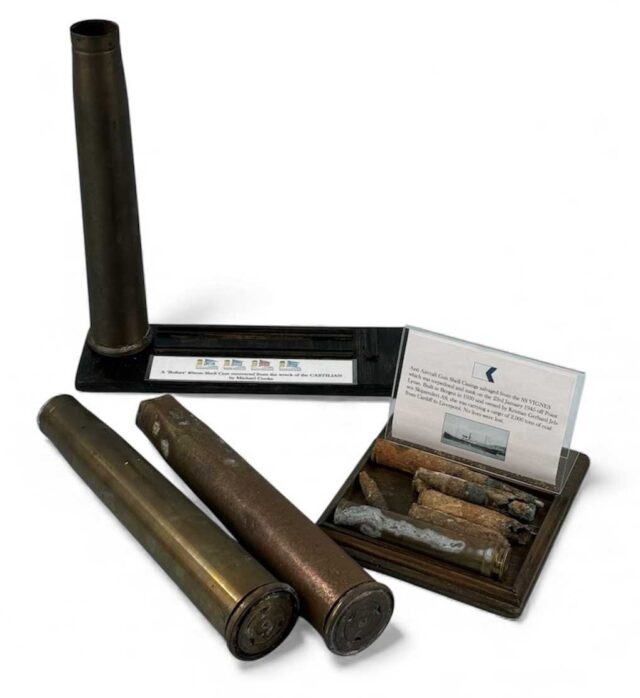
Chester Monthly & Maritime auction takes place at 10am on Tuesday 20th January.
View the full catalogue here.
Imminent Auctions
Thu 5 March 2026 10:00 AM
The Club House
Hawick RFC Collection | Rugby Union | Sports Memorabilia | Military Antiques & Medals | Whisky
Cardiff Saleroom
Tue 17 March 2026 10:00 AM
Colwyn Bay Monthly
Antique Furniture | Silver | Fine Art | Antiques | Collectables
Colwyn Bay Saleroom
Online Soon
Thu 19 March 2026 1:00 PM
British & European Fine Art
Prints | Paintings | Sculpture
Cardiff Saleroom
Online Soon