
Lions, Indomitables and Originals
This is a tale of three treasures, two brothers and one war hero. It’s a story that takes in some of the world’s far-flung, exotic corners - Perth and Sydney, Auckland and Christchurch, San Francisco and Hawaii, The Arms Park and…Trebanog.
That’s where our story begins, with Jack Bassett, the elder of our two brothers, born in 1905 - the same year the All Blacks toured Wales for the very first time, with legendary captain Dave Gallaher leading his famous ‘Originals’.
Jack Bassett
Jack began his playing career with Kenfig Hill, Pyle and Aberavon, before his job as a policeman took him to Penarth. He settled in the town and joined the Penarth club in 1924, making the full-back position his own for the next decade and combining his work with playing duties for both Penarth and the police.
The club might not have been particularly fashionable, but Jack’s skill and strength soon came to the attention of the national selectors. He was a Welsh trialist in the 1926-27 season and was awarded the first of his 15 caps in the defeat against England at Twickenham in 1929.
He captained Wales for the first time the following year, and led them to the Championship in 1931, their ninth overall and their first since 1922. They went through that campaign undefeated, after a drawn match against England at Twickenham was followed by victories over Scotland, France and Ireland.
Having skippered the national team nine times, Jack’s international career came to an end in 1932, but he played on for Penarth, and subsequently for the Cardiff Athletic team - that is, Cardiff’s second team - until 1936.
The highlight of Jack’s career, though, was a British and Irish Lions tour to New Zealand and Australia in 1930. Those 1930 tourists are generally recognised as the first to be widely known as ‘Lions’, and historical accounts note that although Jack was “not necessarily the fastest full-back, he had a great positional sense on the field…and was seen as one of the hardest tacklers in the game.”
Jack Bassett, member of the British Lions rugby union team (1930)
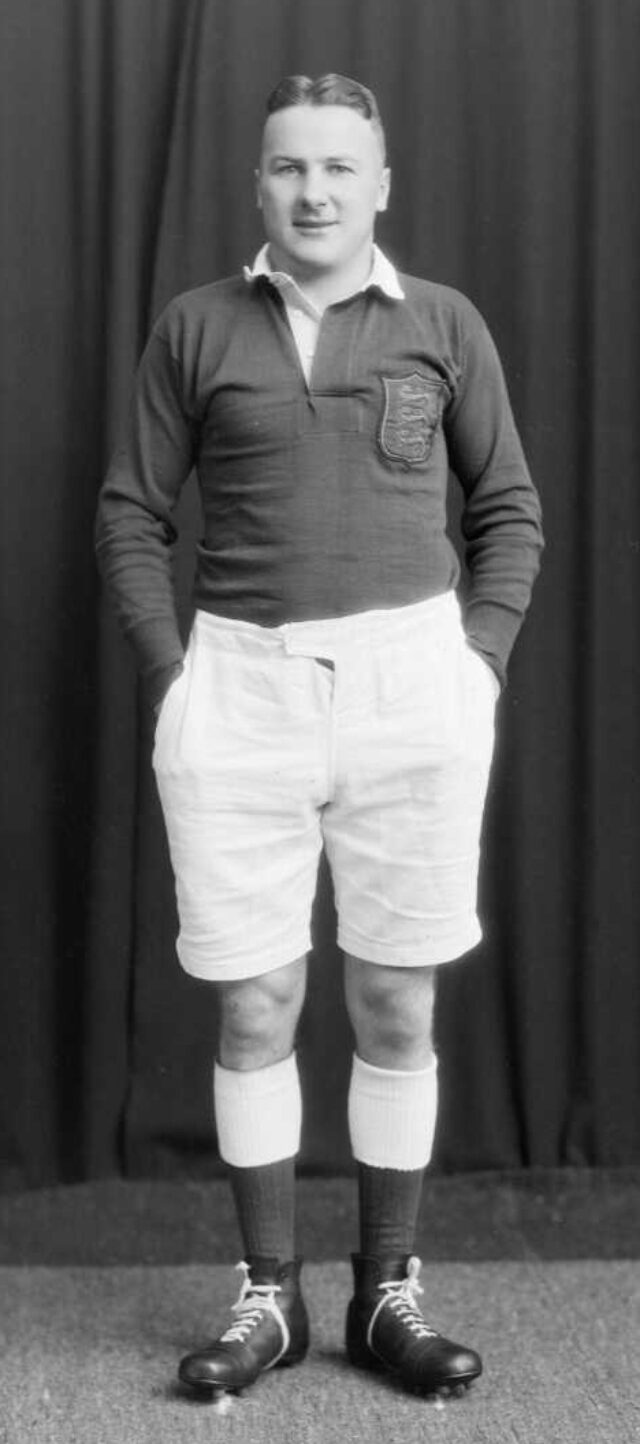
He played all five Test matches on tour, as the Lions won the First, in Dunedin against the All Blacks, only to lose the next three in New Zealand and the following one in Sydney, against Tom Lawton’s Australia.
Despite the tour’s lack of success, Jack Bassett was one of its undoubted stars, seen by some contemporaries as the world’s best full-back, having outshone his opposite number, New Zealand legend George Nēpia, during the All Blacks series.
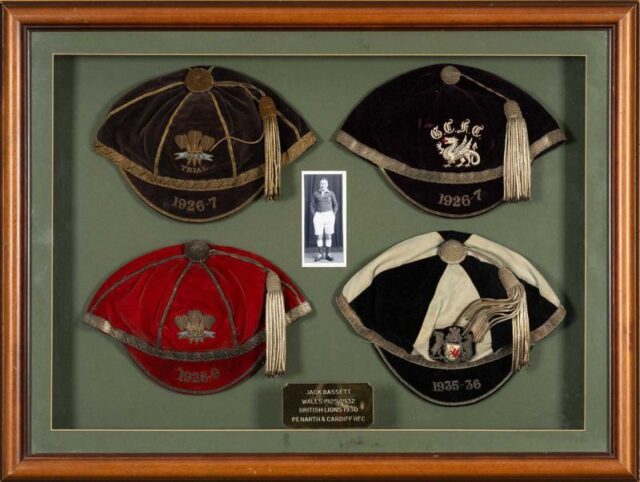
Jack’s tie pin from that 1930 tour actually depicts a Lion as part of its unique design, and this special tour memento features in the next Club House auction at Rogers Jones, alongside four of his caps.
Pride of place in this collection goes to a Welsh cap from 1929, but it also includes a cap honouring his final season as a player, with Cardiff’s Athletic side, the second team known locally as the ‘Rags’.
Jack Bassett (1905-1989) Group of Four Caps & British Lions Pin
The Club House, 5th November 2026
£1,000-2,000
Arthur Bassett
That same season, 1935-36, Jack’s younger brother Arthur was playing for Cardiff’s first team - having joined from Aberavon - and was already a Welsh international. He is the next link in this chain of wonderful rugby history and fascinating sporting memorabilia.
Arthur Bassett was born in Kenfig Hill, on the 28th of June, 1914. This was the very same day that Archduke Franz Ferdinand - heir to the throne of the Austro-Hungarian Empire - was assassinated, along with his wife Sophie, in Sarajevo, precipitating the course of events that led to the outbreak of the First World War a month later.
Like his brother Jack, Arthur became a policeman. He also made a name for himself as a young player - but at wing, not full-back - with Maesteg, Neath and Aberavon, where he won his first caps. He played six times for Wales between 1934 and 1938, before leaving Cardiff in 1939 to turn professional and join Halifax.
And it was as a rugby league player that Arthur Bassett would make history.
Arthur Bassett
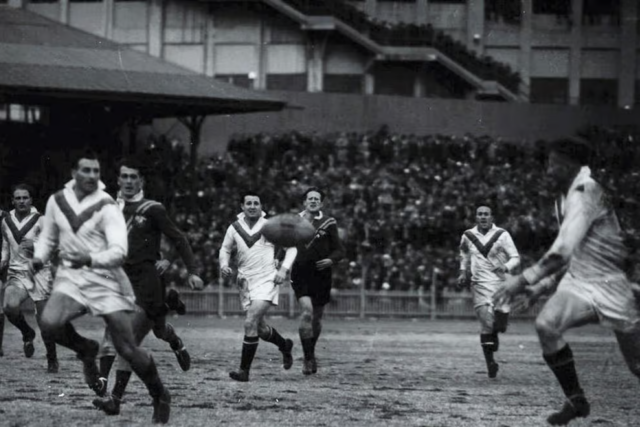
Remarkably, he played for Wales in a win over England in December 1939. Even more remarkably, this was a fifth consecutive win over England in a dominant era for Welsh rugby league. Thus, Arthur Bassett became a dual-code international, before The Second World War started to make its mark on home shores and put a stop to such sporting frivolities.
The 'England' Team
War’s end in 1945 meant that the frivolities could return in earnest, and in rugby league terms, nothing was more earnest than a tour to Australia to contest rugby’s equivalent of the Ashes.
On April 3rd, 1946, just seven months and a day after Japan had formally surrendered, a ‘Great Britain’ Lions touring team sailed out of Plymouth onboard HMS Indomitable. They were called ‘English’ and ‘England’ by the Australians, but the squad of 26 contained no fewer than 11 Welshmen, including captain - and rugby league legend - Cardiff’s Gus Risman.
Other famous Welshmen to make the trip included Garnant and Wigan’s Ted Ward, dual-code international Willie Davies - who’d beaten the All Blacks as a teenaged outside-half with Swansea in 1935 - Frank Whitcombe, Trevor Foster, Ike Owens, Joe Jones, Dai Jenkins, Doug Phllips, Llanelli’s Fred Hughes - father of Liverpool football legend Emlyn - and Arthur Bassett.
There should have been another – the groundbreaking Roy Francis from Brynmawr - who missed out, quite possibly due to the colour of his skin. He went on to become the first Black British sportsman to coach professionally in any sport…but his is a story for another day.
After the best part of a month at sea, the tour party arrived in Fremantle, only to face a five-day journey across the Nullarbor Plain from Perth to Sydney on a military train. Here, they slept in their seats or on the floor because there were no sleeping berths. It was hardly the ideal preparation.
The rugby was as intense and feverish as one would imagine - big crowds, a hostile reception, and a devilishly difficult challenge from the world’s premier rugby league playing nation.
But the Welsh boys made a huge impression - as players, as tourists and as people. They were also welcomed by strong expat communities wherever they went, although half-backs Dai Jenkins and Willie Davies got more than they bargained for during a match against Newcastle. Calling a move in Welsh, they were nonplussed by the response of the opposition’s captain, Viv Madge, who said, “Don’t bother boys, I’m from Swansea too.”
The Indomitables
There were 27 matches - 20 in Australia, 7 in New Zealand - of which 21 were won, 1 was drawn and 5 were lost, including the Test against New Zealand.
But those results were only half the story - in truth, their success was monumental, and they returned as ‘The Indomitables’, the only Great Britain team to date to go unbeaten in a Test series against Australia in Australia. Their achievement - drawing the first Test and winning the subsequent two - ranks with the feats of the all-time great rugby union Lions of 1971 and 1974. Arthur Bassett played a vital role in the two victories, scoring a hat-trick of tries in the Second Test in Brisbane and then another two in the Third in Sydney.
The Indomitables
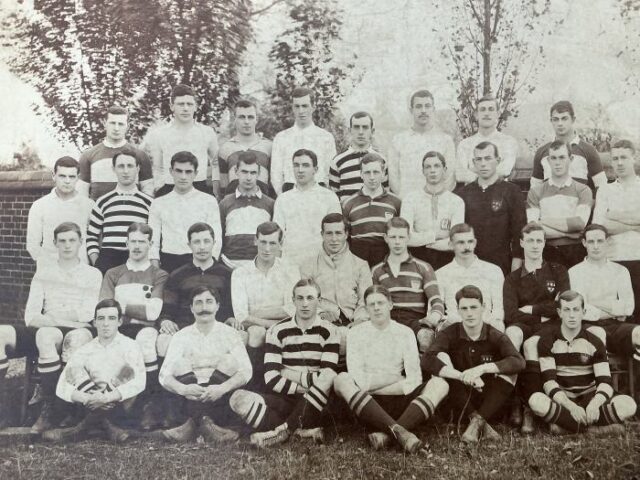
Arthur Bassett (back row, third from right)
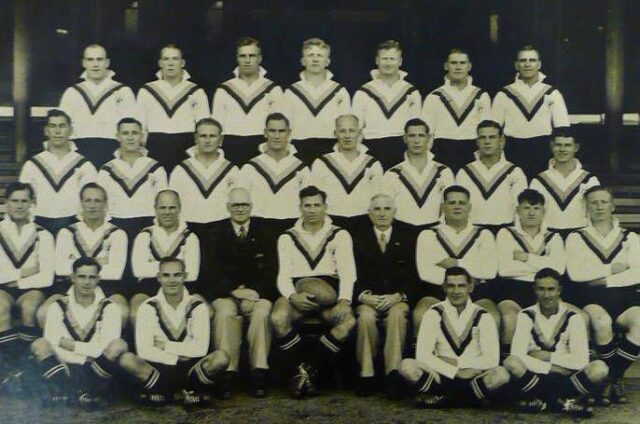
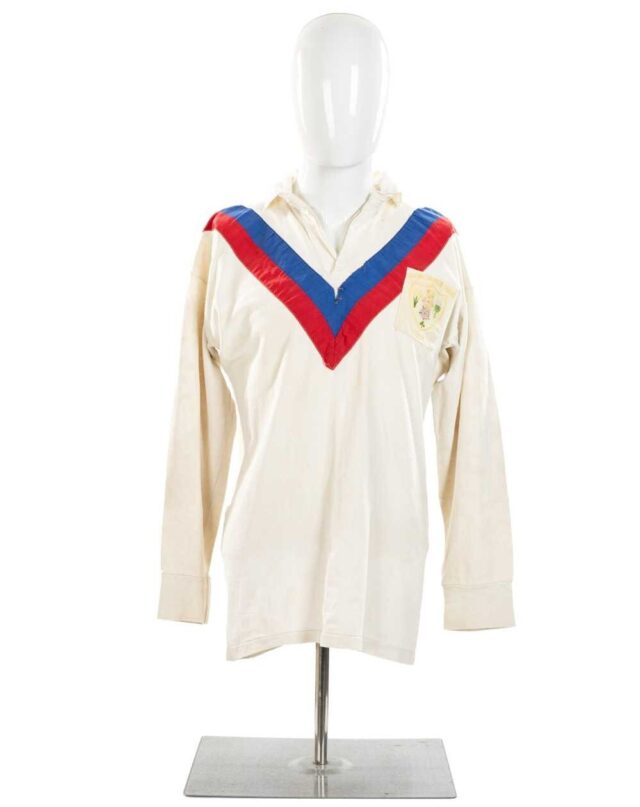
Eighty years on, The Indomitables are rightly celebrated and revered, and The Club House Sale features a unique Test match jersey from that 1946 tour. It was worn by Ken Gee, the Wigan prop who played in all three matches versus Australia and the subsequent New Zealand Test.
Ken Gee Match Worn 1946 Great Britain Jersey
The Club House, 5th November 2026
£800-1,500
The Indomitables played their final match in New Zealand in mid-August and arrived back home the following month after almost six months away from their families.
The Originals
Our final Club House treasure tells of similar journey undertaken 40 years earlier, but in reverse - back home to New Zealand - by another remarkable touring team, so historically important as to be given their own name.
They were ‘The Originals’, captained by one of rugby union’s true icons, Dave Gallaher.
The Originals were the first New Zealand national side to tour Europe. Leaving home in July 1905, they arrived back in March 1906, having played 35 gruelling matches across the British Isles, France, and North America. They won 34 of those matches, scoring a remarkable 976 points to their opponents’ 59.
They lost only one game, that famous encounter with Wales at The Arms Park, on December the 16th 1905. Billed as ‘The Match of the Century’, it was won 3-0 by the home side and was famous not just for the result but for the singing of Hen Wlad Fy Nhadau by the Welsh players and crowd in response to the pre-match Haka - the first instance of a national anthem being sung before an international sporting fixture.
New Zealand’s captain that day was the legendary Dave Gallaher. Already a veteran of South Africa’s Anglo-Boer War, where he’d fought against the Boers in 1901-02 with the Sixth New Zealand Contingent of Mounted Rifles, this remarkable man would enlist again in 1916. This time he fought on the Western Front with the New Zealand Division.
On October 4th, 1917, during the Passchendaele offensive, Gallaher was hit by shrapnel and mortally wounded in the Battle of Broodseinde. He died later that day, aged just 43 years old.
Dave Gallaher in 1905 during The Originals' tour
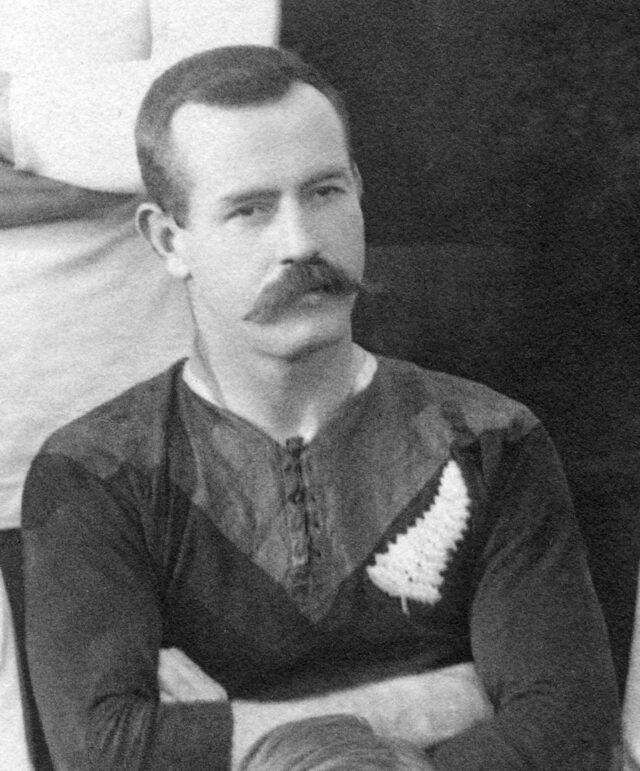
Gallaher’s heroic status and rugby legacy far outlived him, and his name still resonates today. So much so that in 2015, Rogers Jones sold the shirt he wore in that famous match against Wales for a then world record £180,000. The initial pre-sale estimate had been £20,000 to £40,000. The eventual buyer was then Saracens Chairman Nigel Wray.
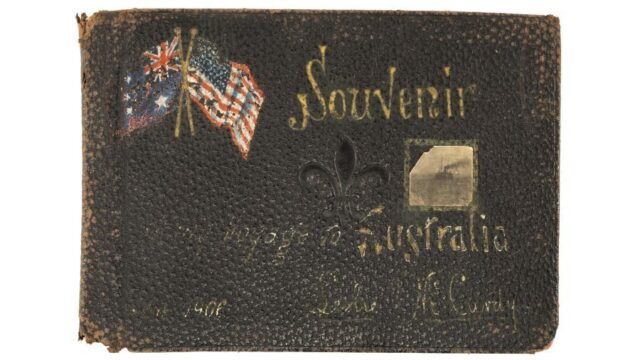
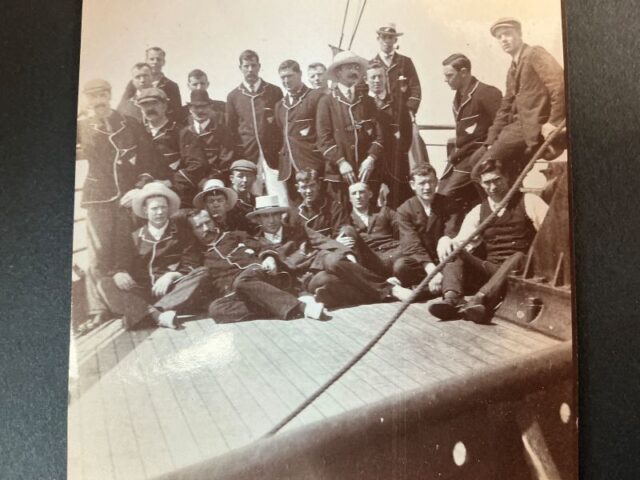
Which brings us on to our third treasure. Gallaher features prominently in some of the photographs that make up an Edwardian souvenir album being auctioned as a part of the next Club House Sale.
The Journey Home
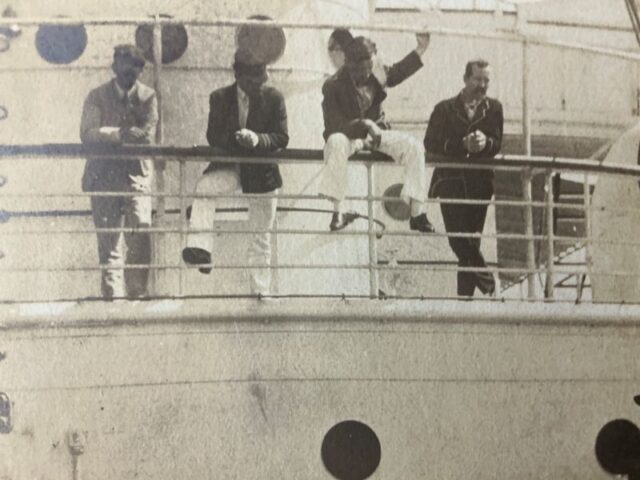
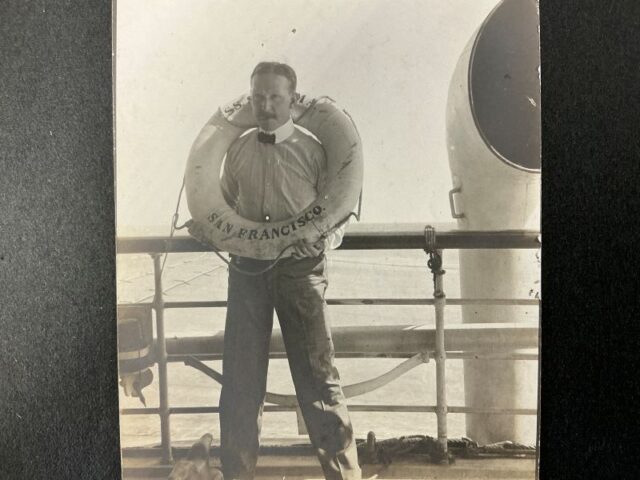
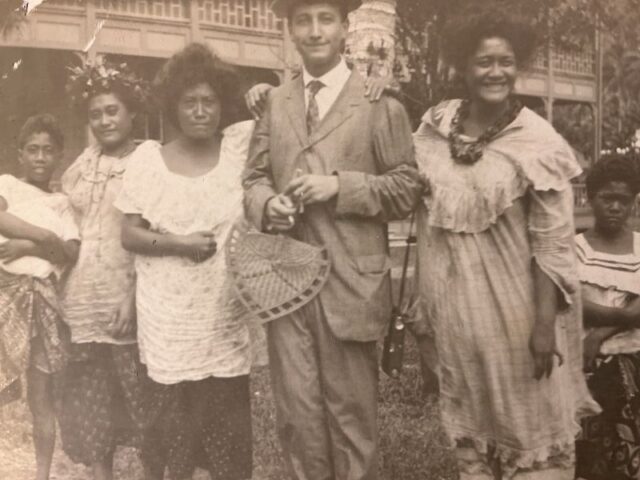
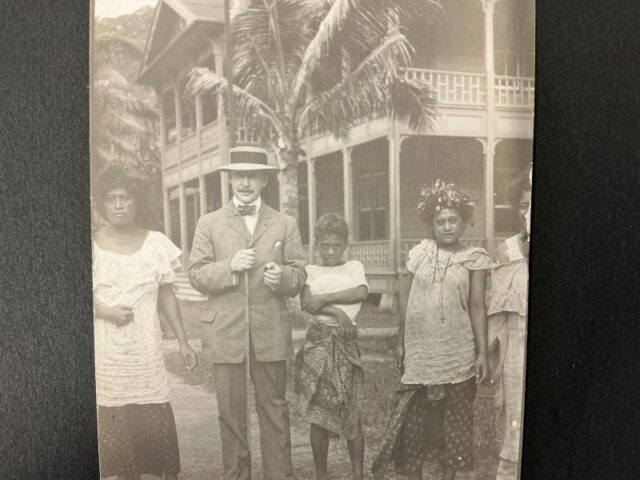
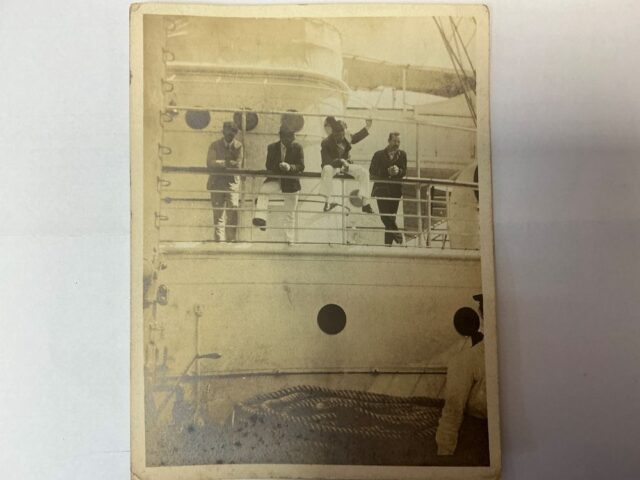
The album focuses on the New Zealand touring party’s journey home in 1906 aboard the SS Sonoma. Departing San Francisco in mid-February - the famous San Francisco Earthquake would claim more than 3,000 lives around two months later - the voyage took in Honolulu and Pago Pago in American Samoa. Some of the history, including the Hawaiian stop-over, is told in the wonderful collection of tour diaries written by outside-half and vice-captain Billy Stead, and published as Billy’s Trip Home: The Remarkable Diaries of an All Black on Tour.
As well as The Originals themselves, the album features numerous photographs of indigenous people and other passengers in exotic locations and situations. The fact that they’ve survived and resurfaced 120 years after they were taken is quite something, and they provide a rare and touching insight into one of the most famous rugby sides ever, as they enjoyed the leisurely homeward leg of their historic journey.
Edwardian Souvenir Album of Photographs
Which includes the famous 1905 New Zealand 'Original All Blacks' tour-party's home voyage from America - The Club House, 5th November 2026
£300-400
So, there you have them, true tales to commemorate three remarkable rugby tourists, who made their mark in the far-flung corners of the earth.
These caps, jerseys and photographs capture legends, tell of sport’s global reach, and celebrate its lasting place in our wider world.
And more than anything, they tell of the brotherhood - both literal and metaphorical - which encapsulates the nature of rugby, its history and its heroes.
Auction Information
The Club House auction takes place on 5th November at our Cardiff saleroom.
Imminent Auctions

Thu 5 November 2026 10:00 AM
The Club House
Motor Sports | Rugby Union & League | Football | Medals & Militaria | Guinness | Maritime & Aeronautical | Railway
Cardiff Saleroom

Thu 12 November 2026 11:00 AM
Luxury Gifts, Jewellery, Coins & Watches
Beautiful items consigned via our five hubs to the specialist pre-Christmas auction
Chester Saleroom
Tue 17 November 2026 10:00 AM
Colwyn Bay Monthly
Silver | Furniture | Antiques & Collectables
Colwyn Bay
Submit Entries by 30/10/2026