
The Many Faces of Ryan Davies
Wales is currently blessed with a generation of truly gifted comedic writers and performers - Ruth Jones and Rob Brydon, Rhod Gilbert and Elis James to name just a few - and there’s another, younger generation coming up on the rails.
When asked about their own Welsh comedy heroes though, one particular name tends to be mentioned by most of these performers, even though they never met him - even though some weren’t even born when he was at his peak.
Ryan Davies, along with his comedy partner Ronnie Williams - it’s difficult to say ‘Ryan’ without adding ‘Ronnie’ - was a staple on stage and screen from the mid 1960s to the mid ‘70s.
Elis James - born after Ryan’s death - has referenced a popular view of this “hugely talented” duo as: “The Godfathers of modern Welsh Comedy”. Rob Brydon has talked of watching Ryan perform at the Grand Theatre in Swansea as a child, then mimicking his characters and performance for friends and family afterwards.
It’s hard to believe that next year is the 50th anniversary of Ryan’s passing. His death in 1977 felt - at the time - like a JFK moment. People remember where they were when they heard the news, firstly because he was in Buffalo, New York State - not here, at home, ‘where he belonged’ - when he suffered a severe asthma attack, leading to heart failure. Secondly, because he was only 40 years old - a star in his prime. Dylan Thomas had died suddenly in New York almost a quarter of a century before him, Richard Burton died in Switzerland seven years after him, another two gone before their time and far from ‘home’. But their lives - and lifestyles - were different, and despite the shock of their loss, there may have been a feeling that Wales had already lost them to a certain extent by the time they passed away.
So 2027 will certainly bring fond remembrance, and equally importantly hopefully, a celebration of Ryan’s life and talent, because in terms of Welsh entertainers, he was - quite simply - ‘The One’.
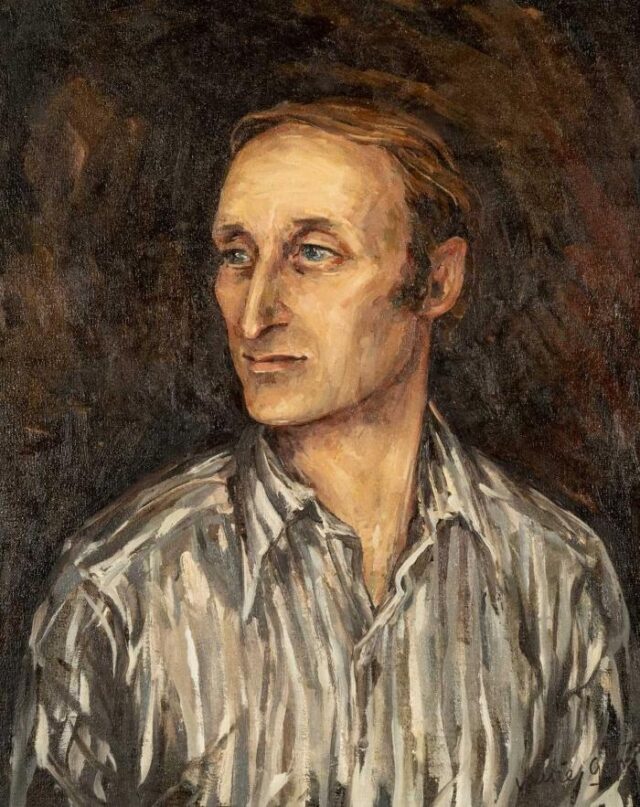
VALERIE GANZ oil 'Portrait of Ryan Davies'
Lot 107 - The Welsh Sale, 25th July
£2,000-3,000
It’s hard to believe that next year is the 50th anniversary of Ryan’s passing. His death in 1977 felt - at the time - like a JFK moment. People remember where they were when they heard the news, firstly because he was in Buffalo, New York State - not here, at home, ‘where he belonged’ - when he suffered a severe asthma attack, leading to heart failure. Secondly, because he was only 40 years old - a star in his prime. Dylan Thomas had died suddenly in New York almost a quarter of a century before him, Richard Burton died in Switzerland seven years after him, another two gone before their time and far from ‘home’. But their lives - and lifestyles - were different, and despite the shock of their loss, there may have been a feeling that Wales had already lost them to a certain extent by the time they passed away.
So 2027 will certainly bring fond remembrance, and equally importantly hopefully, a celebration of Ryan’s life and talent, because in terms of Welsh entertainers, he was - quite simply - ‘The One’.
The Man Who Inspired a Generation
Olwen Rees was there from the beginning - acting and singing with Ryan during the ‘60s and ‘70s. She remembers his kindness above all else:
“He’d help anyone you know, he was just a genuinely nice man…and in many ways he encapsulated the Golden Age of Welsh television, where everything was new, the talent had a national stage, and it felt as though anything was possible. For Ryan, being so multi-talented, that was actually true…anything was possible.”
Hywel Gwynfryn, another BBC stalwart who performed with Ryan and Ronnie, and also wrote a definitive biography of the duo, says simply that:
“Ryan was one of the most talented people that we as a nation have ever produced, and as an entertainer, he was the greatest of them all. There was no-one like him beforehand and there’s been no-one like him since.”
From Carmarthenshire to Centre Stage
Carmarthenshire born, Ryan’s road to greatness took in National Service with the RAF, teacher-training in Bangor, study at the Central School of Speech and Drama in London and years working in a primary school in Croydon. Davies found his true calling though in the mid 1960s. Touring the country appearing in variety shows, and starring in National Eisteddfods, he came to the attention
of Meredydd Evans, Head of the newly formed BBC Wales Light Entertainment Department. Ryan’s partnership with another Carmarthenshire born entertainer - Ronnie Williams - began to take shape in 1967, initially through a show which also featured Jillian Thomas and Johnny Tudor, titled Ryan a Ronnie, Jill a Johnny. Johnny Tudor remembers an immediate and lasting impact:
“Ryan was so talented you know, the first true professional entertainer in Welsh, and he could do everything so well. By the time he passed away, he was already an icon I think, and in both languages too”.
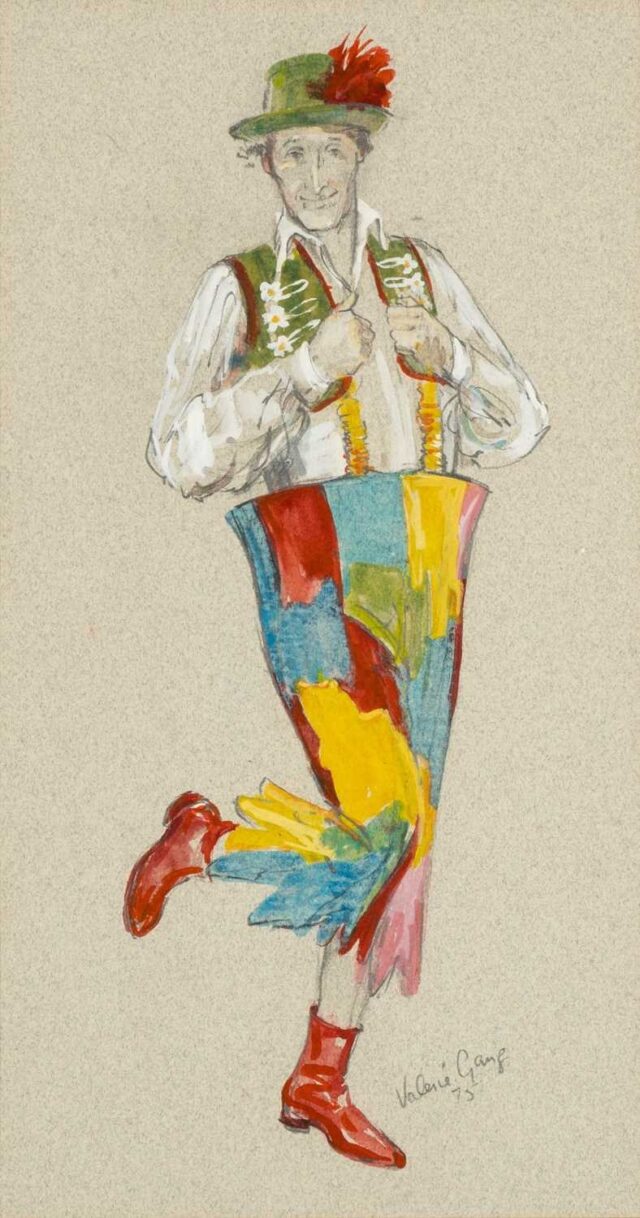
VALERIE GANZ watercolour & pencil 'Ryan Davies as Simple Simon in Jack and the Beanstalk'
Lot 105 - The Welsh Sale, 25th July
£600-1,200
Ryan and Ronnie: Wales' Greatest Comedy Double Act
The chemistry between Davies and Williams was immediately apparent, Ryan the mercurial, endlessly inventive clown, Ronnie the composed, droll straight man. Ryan a Ronnie was a show and a partnership that would define both men’s careers, although it took its toll on Williams in particular according to Johnny Tudor:
“Ronnie was different kind of talent - a great interviewer, a chat show host, a great writer of material for Ryan to be fair, but as with Morecambe and Wise - who people naturally compared them to at the time - the audience tended to
remember the funny one. It’s always the funny man isn’t it, so like Eric Morecambe, the spotlight was always on Ryan. That, I think disillusioned Ronnie in the end, as well as the constant rollercoaster of work. It’s strange you know, he outlived Ryan by twenty years, but he found it tough, and his own passing was just as tragic in the end.”
In their prime though, they felt unstoppable, attracting such memorable guest stars as rugby icon Gareth Edwards, whose interview with Ronnie was interrupted mid-flow by Ryan in full Welsh strip. Edwards then proceeded to take part in a song and dance routine - wonderfully so, since he showed fancier footwork and performing talent than anyone had a right to expect, even for one so accustomed to showcasing his own brand of fancy footwork across the world’s great rugby theatres. Edwards still recalls Ryan’s innate talent:
“I have really fond memories of spending time with Ryan. He had this gift for making you feel like the most important person in the room when you were in his company. It feels like yesterday that I got a call to ask whether I’d join Ryan
and Ronnie in the studio for their Christmas special. I had no idea what to expect, but one thing I was certain of was that it would be a lot of fun, and a day to remember. Ryan as a personality was just on his own - simply the funniest, most talented person I ever met. We as a nation lost a unique and very special character when we lost Ryan Davies.”
Breaking Beyond Wales
Ryan and Ronnie were making such a name for themselves by the end of the ‘60s that Bill Cotton, Head of BBC Light Entertainment in London, felt compelled to come and watch them perform. He didn’t understand Welsh, but he knew talent when he saw it. Soon, Ryan and Ronnie had their own English language show - aired across Britain on BBC1 - which ran for three years at the beginning of the 1970s. That work meant filming in London as well as Cardiff, and led to summer seasons performing in Blackpool as well as legendary winter pantomimes at the Grand Theatre in Swansea. When the strain became too much in the mid ‘70s, the duo split, but Ryan continued to perform and flourish. He once referenced his own ‘jack of all trades’ qualities in a television interview, claiming that in Wales: “You can’t afford to specialise in one thing so you have to try everything”. Rather than being master of none though, Ryan mastered everything. Singer, comedian, actor, impressionist, pantomime star, songwriter, pianist and harpist - though he was more Groucho than Harpo in truth - he was quite simply the most complete entertainer Wales had ever produced.
He acted with Burton, Taylor and O’Toole in the big-screen version of Under Milk Wood, and in the first - some might say only - great Welsh language sit-com, Fo a Fe. If you remember Never the Twain starring Windsor Davies and Donald Sinden as two warring in-laws forced to live in close proximity, well Fo a Fe was similar, but earlier…and funnier.
He was a talented musician and a serious singer. Whether performing his own classic compositions such as Pan Fo’r Nos yn Hir, Nadolig Pwy a Wyr or Blodwen a Meri, or making definitive recordings of other classics such as Yn y Bore or Myfanwy, his tenor voice can still move listeners to tears half a century later.
Hywel Gwynfryn likened him to the great American entertainers:
The Complete Entertainer
He once referenced his own ‘jack of all trades’ qualities in a television interview, claiming that in Wales: “You can’t afford to specialise in one thing so you have to try everything”.
Rather than being master of none though, Ryan mastered everything. Singer, comedian, actor, impressionist, pantomime star, songwriter, pianist and harpist - though he was more Groucho than Harpo in truth - he was quite simply the most complete entertainer Wales had ever produced.
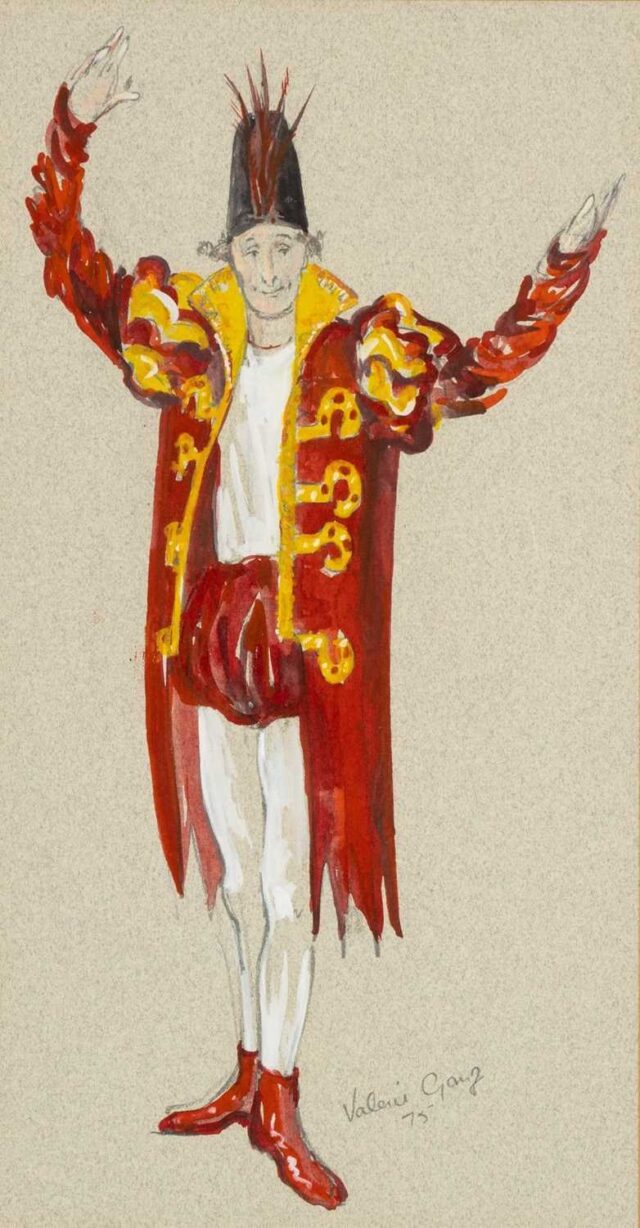
VALERIE GANZ watercolour & pencil 'Ryan Davies as Simple Simon in Jack and the Beanstalk'
Lot 103 - The Welsh Sale, 25th July
£600-1,200
He acted with Burton, Taylor and O’Toole in the big-screen version of Under Milk Wood, and in the first - some might say only - great Welsh language sit-com, Fo a Fe. If you remember Never the Twain starring Windsor Davies and Donald Sinden as two warring in-laws forced to live in close proximity, well Fo a Fe was similar, but earlier…and funnier.
He was a talented musician and a serious singer. Whether performing his own classic compositions such as Pan Fo’r Nos yn Hir, Nadolig Pwy a Wyr or Blodwen a Meri, or making definitive recordings of other classics such as Yn y Bore or Myfanwy, his tenor voice can still move listeners to tears half a century later.
Hywel Gwynfryn likened him to the great American entertainers:
“He was fascinated by America, and the likes of Sinatra and Dean Martin. Ironically, in terms of looks, talent and especially his all-round singing ability, I always saw him as a Welsh equivalent to Sammy Davis Jnr... and those two were both great comics too.”
Ronnie Williams himself once described Ryan as:
“The funniest person I ever met. A large nose and hair like Bobby Charlton, a great personality and sense of timing. Timing is everything, you can’t teach it - you’re born with it.”
Comedy Was Written on His Face
According to Olwen Rees, the aquiline features and the whippet-thin body meant that Ryan was born for comedy:
“I’ll always remember his songs, he had a beautiful voice, but it’s true that he was physically built for comedy. It’s strange, he wasn’t necessarily a handsome man, but he had this charisma and these piercing, expressive eyes…and his whole body and manner leant itself naturally to being a clown.”
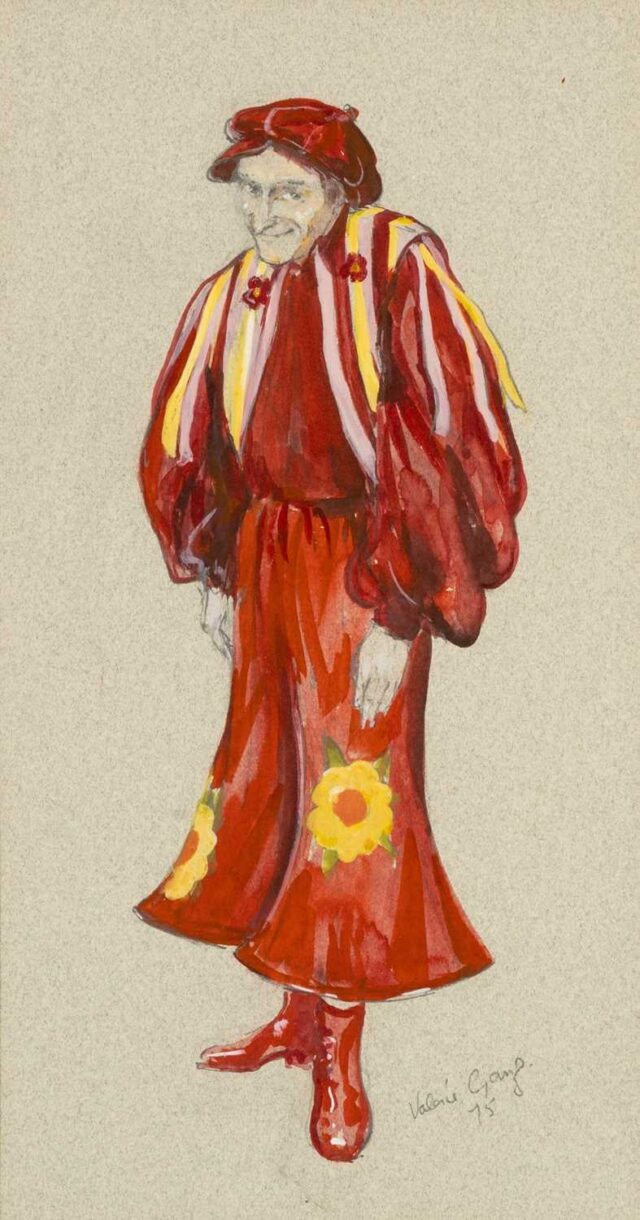
VALERIE GANZ watercolour & pencil 'Ryan Davies as Simple Simon in Jack and the Beanstalk'
Lot 104 - The Welsh Sale, 25th July
£600-1,200
The Characters That Made Wales Laugh
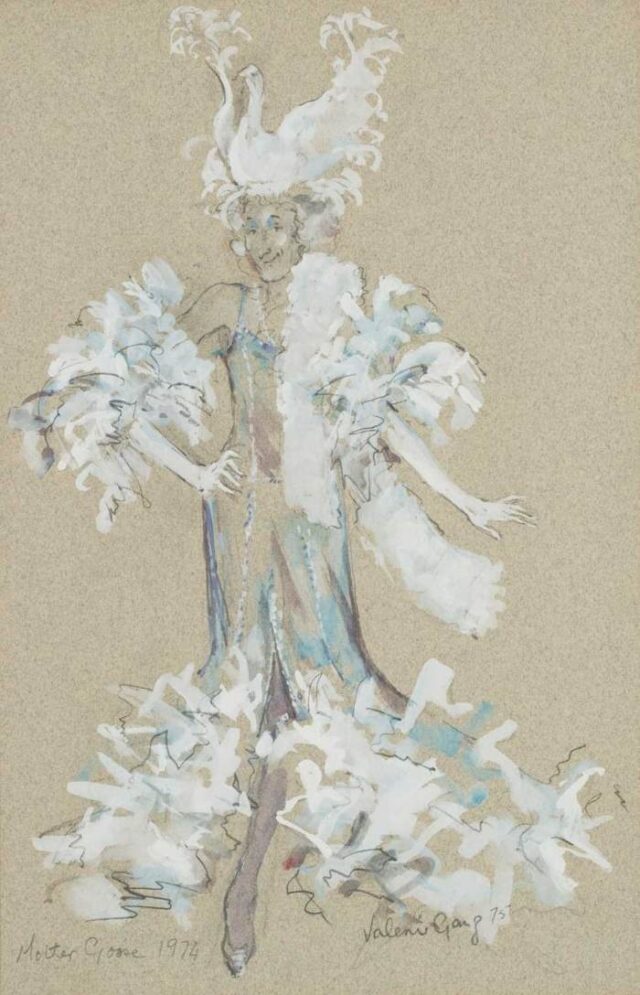
Ryan was once described in the Welsh press as having: “A face like Punch - with his nose touching his chin”, but he could also play Judy equally as well, following the ‘70s fashion for male comedians performing as female
characters. “He was great as a Dame” according to Olwen Rees:
“He just had this knack for characters - whether men or women - and based lots of them on those he knew from his own community. He also just loved being in the spotlight, and whether in Welsh or English, he could hold an audience in the palm of his hand.”
VALERIE GANZ 'Ryan Davies as Mother Goose'
£600-1,200
What Might Have Been
Johnny Tudor feels that the potential was there to go even further:
“He could easily have made it on his own across the border. He’d achieved so much by the age of forty you know - there was even talk of becoming one of
the characters in Last of the Summer Wine, a classic BBC comedy for instance. He would have been perfect for it too, so there’s that sense of ‘what could have been.’”
Hywel Gwynfryn feels that:
“Ryan stands alone. Comedy has changed over the decades since of course, and there’s plenty of talent now certainly, but no-one who can do the things he did. When you watch the sketches and listen to the songs today, you understand why his influence is so strong, why modern Welsh comics still revere him.”
A Legacy That Still Echoes
“Laughter is the same in both languages” Ryan once said, and he always - always - left them laughing. That his career in the spotlight lasted just over a decade, and his life only forty years, makes his loss all the more painful - and his legacy all the more remarkable. If all the world’s a stage, then even the grandest stage of all never quite seemed large enough to hold Ryan Davies.
By Rhodri Davies
Further Reading
Imminent Auctions
Maw 14 Gorffennaf 2026 10:00 YB
Chester Monthly
New Chester Saleroom
Sad 25 Gorffennaf 2026 10:00 YB
The Welsh Sale at Gregynog Hall
Caerdydd
Llun 27 Gorffennaf 2026 11:00 YB
The Welsh Sale (Part II)
Welsh Sporting Antiques, Welsh Antiques incl. ceramics, Welsh Art Collection Builders (unreserved)
Caerdydd