Mary Fedden
Mary Fedden (1915-2012) left school at sixteen to study at the Slade School of Art, where she met her eventual husband, Julian Trevelian. She studied under the theatre designer Vladimir Polunin, who’d worked with the Ballets Russes. Fedden graduated in 1936 but the beginning of her artistic career was forestalled by the outbreak of the Second World War. She volunteered as a Land Girl, hoping to be sent to the country far away from the bombings, but instead ended up at a farm in Gloucestershire next door to the Bristol Aeroplane Company in Filton, which was a major target of the Luftwaffe.
Later in the war she moved to London and worked as a set painter for the Arts Theatre and as a mural artist painting propaganda for the Ministry of War. In 1944 Fedden was called up and sent abroad to work as a driver for the assistant head of the Naafi in Europe. She returned to London two years later and took up painting again, with her first solo exhibition in the Mansard Gallery at Heal’s in 1947.
.......
Why is Mary Fedden so collectable?
Fedden’s artistic foundations were established at the Slade School of Art, which she entered at just sixteen years old. There, she studied under the theatre designer Vladimir Polunin, whose background with the Ballets Russes helped to shape her lifelong appreciation for colour, balance and composition. Reflecting on his influence later in life, Fedden remarked, "He gave me a direction for colour and design...looking back, I am sure he was a wonderful inspiration to me."
Although her career was interrupted by the Second World War, Fedden’s varied wartime experiences, from set painting in London theatres to producing murals for the Ministry of War, helped develop the visual storytelling and theatrical composition that would later define her paintings. Following the war, she resumed painting and held her first solo exhibition at the Mansard Gallery in 1947, marking the beginning of a highly successful career.
Fedden’s reputation continued to grow throughout the second half of the twentieth century. Alongside collaborations with fellow artist Julian Trevelyan, she completed prestigious mural commissions for the Festival of Britain, Charing Cross Hospital, and the P&O liner SS Canberra. Her standing within British art was further cemented when she became the first female painting tutor at the Royal College of Art, where she taught influential artists including David Hockney.
Today, collectors continue to value Mary Fedden’s work for its warmth, originality and timeless appeal. Her colourful still lifes, interiors and landscapes - often featuring flowers, cats and domestic objects - remain highly desirable at auction, particularly among buyers seeking iconic examples of twentieth-century British art.
Mary Fedden’s distinctive artistic style
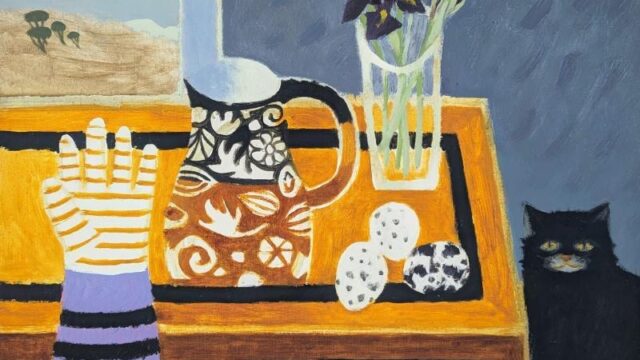
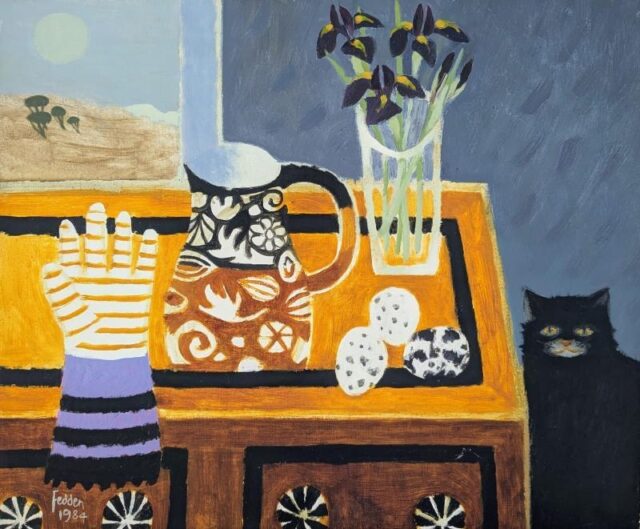
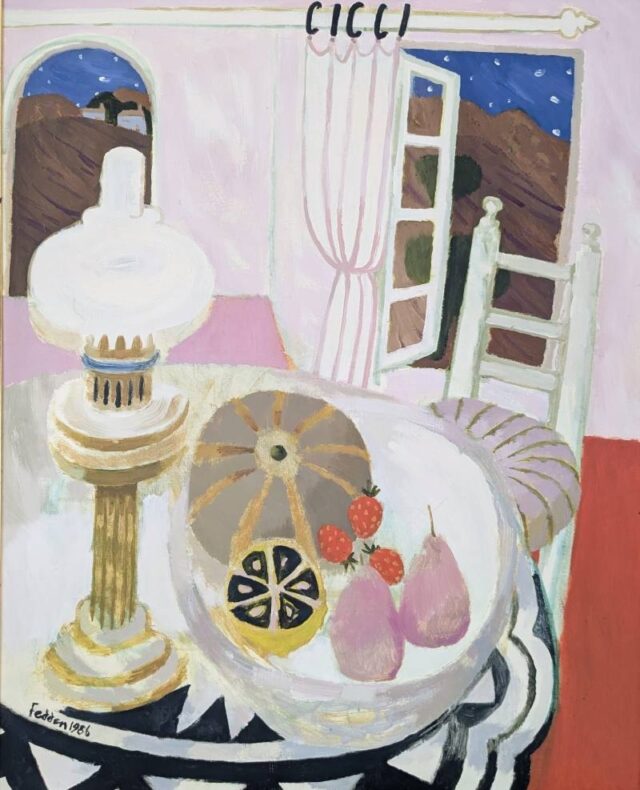
Fedden's work evolved over time, influenced by Trevelyan as well as Henri Matisse, Georges Braque, and Ben Nicholson. Her compositions are often a hybrid of still life and landscape, characterised by a flattened picture plane. She had a particular fondness for cats, which frequently appear in her paintings.
"I use objects a lot, but I never set up a conventional still-life composition and work from that. Instead I have things around me in the studio, perhaps beside me on a chair, and I add other objects as I develop the idea. I like the juxtapositioning of unrelated elements.
Sometimes people comment that a certain object doesn't look a bit like the real thing. I'm glad it doesn't! I prefer to use my imagination and change things around — I am not after a representational image."
Mary Fedden and the Modern British Art Market
Today, Mary Fedden’s paintings regularly feature in leading modern British art auctions, with collectors particularly drawn to her oil paintings featuring cats, flowers and Mediterranean-inspired interiors.
In fact, at our recent British & European Fine Art Auction, Fedden’s piece titled ‘Near Luciano’ sparked a four-way bidding battle between three telephone bidders and one online bidder before finally selling online for £17,000. All five Fedden works exceeded their estimates, underlining the artist’s enduring popularity.
Mary Fedden paintings in Rogers Jones Auctions
£4,000-6,000
£5,000-7,000
£6,000-10,000
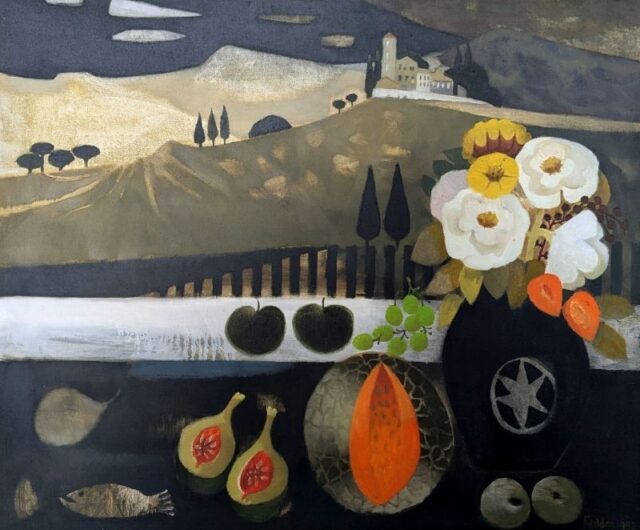
The British & European Fine Art auction takes place on Thursday 21st May at our Cardiff saleroom.
FAQs About Mary Fedden
Why is Mary Fedden so collectable?
Mary Fedden’s paintings are highly collectable due to their distinctive style, vibrant colour palettes and enduring popularity within the modern British art market.
What type of paintings did Mary Fedden create?
Mary Fedden is best known for still lifes, landscapes and interior scenes featuring flowers, cats and domestic objects.
Are Mary Fedden's paintings valuable?
Original oil paintings by Mary Fedden regularly achieve strong results at modern British art auctions, particularly works from her mature period.
Where can I buy Mary Fedden paintings at auction?
Collectors can browse Mary Fedden's works through specialist British art auction houses, including Rogers Jones.
Where can I buy Mary Fedden paintings at auction?
Collectors can browse Mary Fedden's works through specialist British art auction houses, including Rogers Jones.


Ben Rogers Jones BA (Anrh)
HYNAFOLION A CHELF GYMREIG & ARBENIGWR HEN BETHAU’R BYD CHWARAEON