Gwen John (1876-1939) at Auction
Welsh artist Gwen John’s reputation has famously overtaken that of her once more celebrated brother, Augustus John.
In this April's Welsh Sale auction we are offering not one but three examples of Gwen's drawings - to have three in one auction is very rare indeed. But their entry to our auction is a timely one as to mark the 150th anniversary of her birth, National Museum Cardiff is hosting a landmark retrospective titled Gwen John: Strange Beauties.
The exhibition is running from 7 February to 28 June 2026. This "once-in-a-generation" exhibition features rarely seen drawings and watercolours from the museum's world-leading collection, alongside masterpieces on loan from international partners like the Yale Center for British Art. It is the first major retrospective of her work in over forty years and aims to dismantle the myth of her as a recluse, instead showcasing her as a pioneering modernist of international standing.
On BBC iplayer Sian Eleri explores the mystery of Gwen John in a one part programme released on February 5th to commemorate the National Museum exhibition.
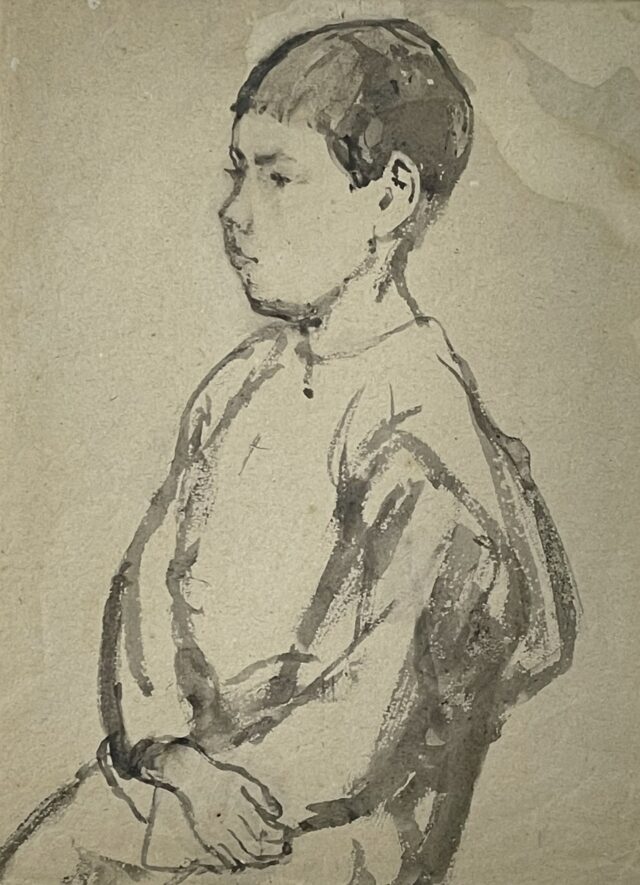
Gwen John at The Welsh Sale on April 19th 2026
Boy in Sailor's Uniform
£12000-18000
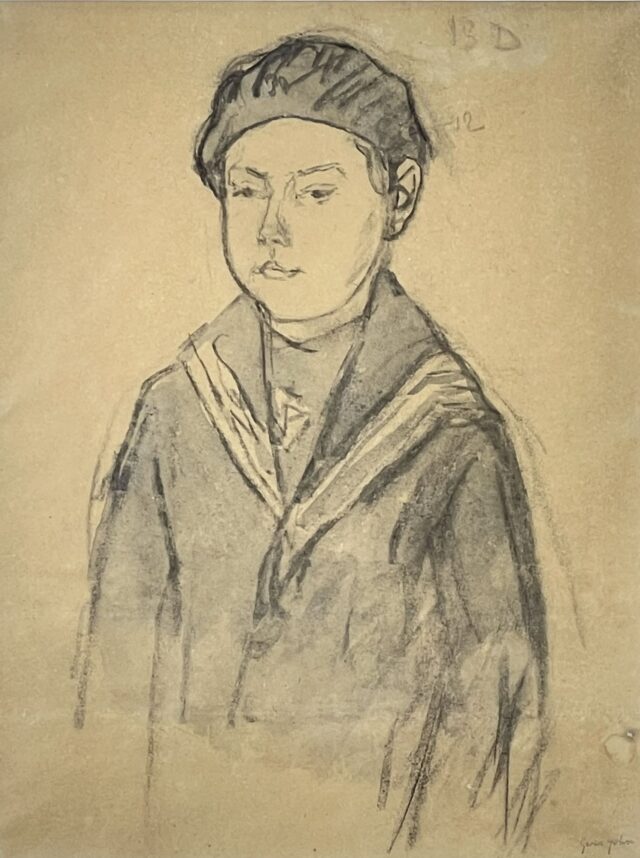
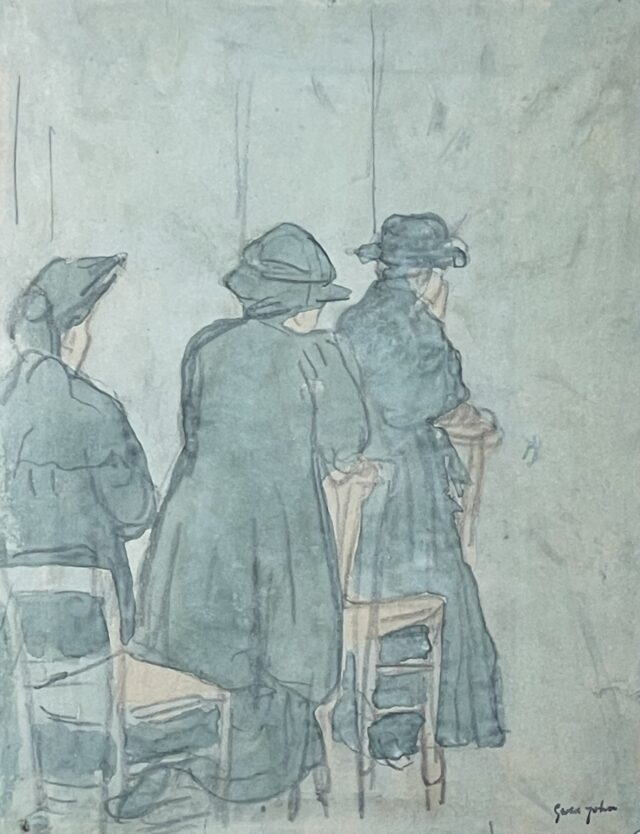
Gwen John at The Welsh Sale on April 19th 2026
'Three Women in Church'
£15000-20000
Gwen John at The Welsh Sale on April 19th 2026
'Seated Boy' circa 1919, 31 x 22cms
£9000-13000
Born in Haverfordwest and raised in Tenby, Gwen John was a trailblazer from the start, becoming part of the first generation of women to receive formal art training at the Slade School of Art in London. In 1904, John moved to Paris to "flourish" independently. While she is often historically romanticised through her intense ten-year affair with the sculptor Auguste Rodin, for whom she also modelled, her own work remained fiercely original. She developed a methodical approach to painting, often repeating subjects—solitary women, interior rooms, and cats—to perfect her use of subtle, muted tones. Her dedication was almost scientific; she even created a personal numerical coding system to record and replicate specific colour tones. Following her conversion to Catholicism in 1913, her work took on a more meditative, spiritual quality, often depicting nuns and churchgoers.
'Do not listen to people (more than is necessary)', 'Do not look at people (ditto)', 'have as little intercourse with people as possible'... 'when you have to come into contact with people, talk as little as possible'… 'do not look in shop windows.'
Gwen John’s work has become increasingly vital to the modernist canon as critics and historians re-evaluate her contribution to 20th-century art. Her focus on tonal harmony and the "inner life" of her subjects predated many modern psychological approaches to portraiture, and her portraits of self-possessed women are now celebrated as powerful assertions of female independence. While once overshadowed by her brother’s flamboyant public persona, critics now frequently regard Gwen as the superior artist, fulfilling Augustus’s own prediction that he would one day be known merely as her brother.
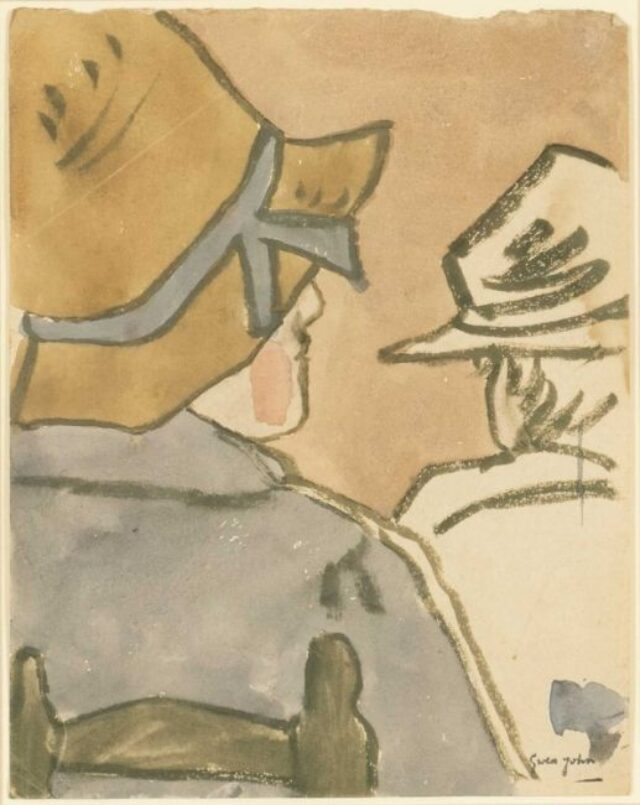
Gwen John 'Two Hatted Women in Church'
The last time that Gwen John was offered at The Welsh Sale
Sold £22,000
The Welsh Sale is to be held in Cardiff on April 19th. Please contact Ben Rogers Jones for further information.