
The Enduring Magic of 9-3
Why does one rugby score still resonate across Wales more than half a century later?
On 31 October 1972, Llanelli secured one of the most celebrated victories in Welsh rugby history, defeating the New Zealand All Blacks 9-3 at Stradey Park. As Tommy David's match-worn jersey from that historic afternoon comes to auction at this July's Welsh Sale, Rhodri Davies explores why the match has become one of Welsh sport's defining moments.
The Score That Wales Never Forgot
To understand just how and why one particular rugby match - Llanelli versus the New Zealand All Blacks on October the 31st 1972 - is so deeply embedded in our collective national psyche, it’s worth pondering this: Can you think of another rugby score?
Any at all?
Wales’ Grand Slam winning scores from 1971, ‘76 or ’78? More recent Grand Slams from 2005 or ’08? From 2012 or ’19? That monumental emasculation of Grand Slam-chasing England, to win the Six Nations Championship under the closed roof in 2013?
The score when Wales last beat the All Blacks, back in 1953? Other notable scores by club sides? Historic scores by the best ever Lions sides on the record breaking 1971 and 1974 tours?
Tough isn’t it?
Yet 9-3 is always there. Despite the passage of time and sadly by now, the loss of many of that day’s heroes, it remains - mythical, magisterial, monumental.
There are caveats here by the way, which might reveal a simple reason why 9-3 endures. Cardiff supporters can claim that their 1953 win over New Zealand - by 8 points to 3 - was equally as impressive. Swansea beat the All Blacks by a score of 11-3 in 1935, the first Welsh club side to do so. Newport rugby fans may also claim that their side’s win over the All Blacks in 1963 - by 3 points to 0 - was as memorable as any.
The first time Wales ever played The All Blacks, beating them by 3 points to 0 in 1905, is another result rugby historians might pluck from thin air. The First Test in Dunedin in 1971, a famous Lions victory by 9 points to 3, falls into this bracket too.
What do they have in common? They are all low scoring matches, mostly single numbers, and much easier to recall than the zenith of Lions history, the 26-9 series-deciding win in the third Test in Port Elizabeth in 1974, or 32-20, the score that brought victory over Ireland in 2005, thus securing a Grand Slam and ending twenty seven years of hurt.
So maybe, just maybe, the digits matter, along with club loyalties. And yet this particular 9-3 means more - much more - than mere numbers and parochialism.
Max Boyce and the Song That Immortalised Llanelli’s Greatest Day
It was a dark and dismal day
In a week that had seen rain
When all roads led to Stradey
With the All Blacks here again...
The opening lines from 9-3 by Max Boyce remain instantly recognisable over half a century later, and transport generations back to those glory days, the golden age of Welsh rugby.
Not all though. Maybe 9-3 doesn’t quite resonate with younger generations. One of the modern greats, for the Scarlets themselves as well as Wales and the British Lions, is a case in point. George North, born just before the game went fully professional, apparently didn’t even realise that club teams had played against the likes of New Zealand when he first arrived in Llanelli as a teenager, and he was stunned to learn that the mighty All Blacks had once been humbled by Llanelli - but they were, and thoroughly so.
Which is why Max Boyce felt compelled to capture and immortalise the occasion with one of his most enduring works. As he explained, the words were:
“Hardly about the game itself at all - I don’t mention who scored - I don’t mention the charge down try, nothing. It was more about the passion at the game and the effect it had on the town...It almost had religious overtones... There was almost an inevitability that Llanelli were going to win...a feeling in the air that the gods were smiling on them that day.”
More Than a Match: The Crowd, the Atmosphere and the Magic of Stradey Park
Boyce isn’t alone in focusing his attention away from the action on the pitch. It was an occasion like no other.
A nation followed the match live, in glorious colour, thanks to a special BBC broadcast that Tuesday afternoon. This in itself made the event unique - everyone felt as though they were a part of the moment and the magic.
The images have been played and replayed over the decades, and it’s the mood - the canvas - that lingers in the mind as much as the play itself. The crowd - a swaying, seething, singing mass of humanity - were an integral part of the occasion. Almost 25,000 managed to squeeze into Stradey Park, and in reminiscing, the players themselves all mention the part they played.
According to Tom David: “We had the crowd with us. They played as much a part in that victory as we did on the pitch.”
Clem Thomas, the former Swansea player, Lion and Wales captain, was remembered for his integral role in defeating the 1953 New Zealanders. He was covering the match as a journalist for The Observer in ’72 and had this to say:
“There is at Stradey Park an intensity of parochial feeling, love of the game...far beyond anything I have experienced anywhere in the rugby world. Not even in other parts of Wales, South Africa, Fiji or even Otago, New Zealand, have I experienced such vehemently violent passion and it is the only place I know where the crowd leads the pack and often referees the match as well.”
Legendary All Blacks winger Bryan Williams - shocked and humiliated in defeat - recalled:
”The passion and intensity of the crowd - that hit us hard - we couldn’t believe that the crowd were so close to us... within touching distance...What made an impression was seeing what the victory meant to the people of Llanelli.”
And to the people of Wales, who cherished any victory over New Zealand. Tom David certainly felt that to be the case, when he got back home to Pontypridd: “It was amazing how many people were coming up to congratulate me...They wanted to share in the victory...it meant as much to them as Llanelli fans.”
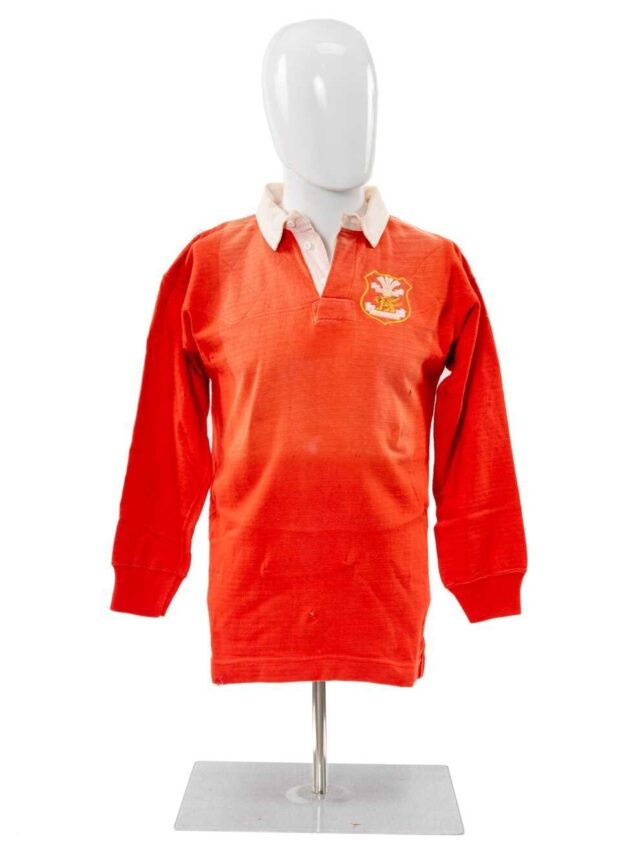
1972 LLANELLI RUGBY UNION JERSEY - Famously match-worn by Tommy David versus New Zealand
Lot 358 - The Welsh Sale (Part II), 27th July
£7,000-15,000
The Players Who Made Llanelli History
David of course was one of three players brought into the squad by coach Carwyn James especially with this game in mind. He, JJ Williams and Ray ‘Chico’ Hopkins all played their part, and although their arrival at Stradey initially caused division among fans and players alike - they were after all taking the places of local boys and favourites - David felt that the chance to be a part of history was too good to turn down: ”With all the love I have for Pontypridd...moving to Llanelli would be like moving from Hartlepool to Liverpool in football terms.”
It paved the way for Welsh caps, for a key role in another immortal match - the Barbarians win over New Zealand the following January, and for a place on a momentous Lions tour - to South Africa in 1974.
It’s a reminder too of just how good a side those Scarlets were. Three players - Hopkins, Derek Quinnell and captain Delme Thomas were victorious Lions in New Zealand in 1971. Four more, Phil Bennett, JJ Williams, Roy Bergiers and David himself, were victorious Lions in South Africa in 1974. There were others all over the pitch who were international class.
And then of course there was Carwyn - the scholar, the Svengali - the coach who’d beaten the All Blacks in New Zealand with the Lions the previous year, and who’d do so again with the Barbarians. He was captured in all his mystic glory by a television documentary broadcast on HTV Wales - as was - in the months after the match. Who Beat The All Blacks? added another layer to the mythology and further ingrained the match, the players, the coach and the club in our collective memory.
Carwyn captured the essence of Llanelli’s appeal in some ways - they were the club of the rugby romantics and the Welsh speakers, and they played the game differently. Even the Stradey scoreboard - immortalised by wonderful and widely circulated photographs of the match - was in Welsh, a reflection of geography and culture. Llanelli was not a big city club. It was a a meeting point, a place where the anthracite coal fields merged with the agricultural west, where many players worked in heavy industries like the local steelworks, where the Welsh language was modified to become ‘Llanelli Welsh’.
New, technical, industrial terms such as pressing, kneeling and shunting had become ‘presso’, ‘kneelo’ and ‘shunto’, which explains where Llanelli’s tough as teak hooker Roy ’Shunto’ Thomas got his nickname - this was his step-father’s vocation underground.
So these players didn’t just represent us - they were us - amateurs, friends and workmates, many of whom were actually back in work the morning after the match - a Wednesday - having just created history.
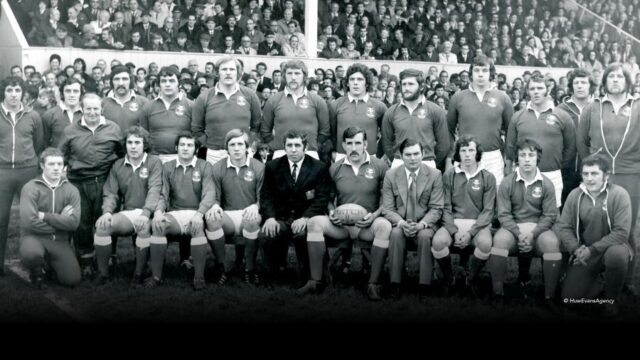
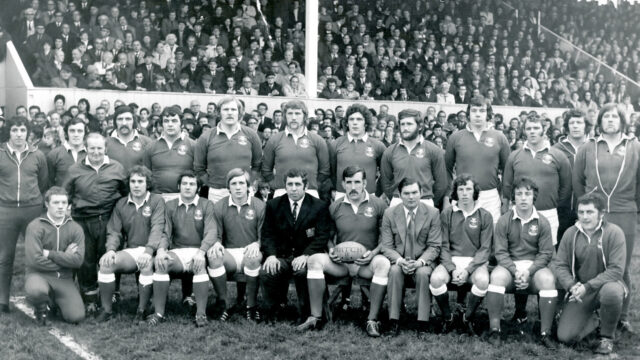
The Llanelli team that beat New Zealand in 1972
Why the Legend of 9-3 Still Endures
In July 2007, the players gathered at the Stradey Park Hotel to honour one of their own, Ray Gravell, and to celebrate their historic achievement. Max Boyce performed; beer and tears flowed. ‘Grav’ himself would be gone in a matter of months.
That night though, he and each and every other player mentioned what had driven them on to their glorious apogee. They had, quite simply, done it for their captain, whose pre-match exhortations had left them with no choice but to get out there and win. Mild mannered, gentle, generous Delme Thomas, the man described by that doyen of New Zealand rugby journalists, Terry McLean as: “Too incredibly nice a man for the rough-and-tumble of international rugby”, was the catalyst for onfield miracles. He had reminded his Scarlets that he was a three times Lions tourist, that he’d beaten the All Blacks on their own patch, that he was immensely proud of this achievement and to be capped by his country. “But” said Delme: “I’d give it all up - all the caps, everything - to beat the All Blacks at Stradey today.”
The image of Delme post-match, surrounded by adoring fans - raised - arms aloft - on the shoulders of his own players, is another abiding memory. According to New Zealander McLean’s adoring analysis:
“The better team by a long, long margin, won the game... (with a) beauty of effort and a heroic virtue that shall never wither in the minds of the Welsh of the west.”
And maybe it takes an outsider to encapsulate exactly what it all meant and why...”Did they not understand” wrote McLean:
“Delme and Carwyn and all of the Welsh were brothers under the skin? That, having lived so much in the misery of mining and associated crafts, they had come to believe they could, if they tried, conquer the world? Which, right now, they had done.”
Romantic? Certainly...but maybe that’s how we in Wales like to see ourselves, or at least remember our better selves.
Even if that world has long-vanished, the legend endures, because - and it’s worth remembering this since it sums up so much more - that day in Llanelli, a Tuesday at the end of October in 1972, was the last time any senior Welsh side - club or country - defeated the mighty New Zealand All Blacks.
By Rhodri Davies
Broadcaster, journalist and author of ‘Undefeated - The Story of the 1974 Lions’.
Auction Information
The Welsh Sale (Part II) will take place on 27th July at our saleroom in Cardiff. View the full catalogue here.
Related Content
Selling Rugby Memorabilia
From match-worn jerseys to international caps, Rogers Jones has become one of the UK's leading auction houses for rugby memorabilia, achieving world-record prices including Sir Gareth Edwards' record-breaking Barbarians jersey.
→ Learn more about selling rugby memorabilia
Llanelli v All Blacks 1972: Key Facts
What happened in the 1972 Llanelli v New Zealand match?
Llanelli beat New Zealand 9-3 at Stradey Park on 31st October 1972, through a Roy Bergiers try, a Phil Bennett conversion and an Andy Hill penalty. The win famously caused the town's pubs to run dry and inspired a Max Boyce poem and song.
Who was Tommy David?
Tommy David was a Welsh back-row forward of the 1970s who played for Pontypridd, Llanelli and Cardiff. He beat the All Blacks twice in one season. Once with Llanelli in 1972 and again with the Barbarians in 1973. David was also part of the 1976 Grand Slam squad and toured with the 1974 British Lions.
Why is the 1972 Llanelli jersey so collectable?
It is a genuinely rare, match-worn jersey from one of rugby union's most famous upsets, with direct provenance from Tommy David and family. To our knowledge, no other jersey from the match has ever been auctioned.
Imminent Auctions

Sad 25 Gorffennaf 2026 10:00 YB
The Welsh Sale at Gregynog Hall
Caerdydd
Llun 27 Gorffennaf 2026 11:00 YB
The Welsh Sale (Part II)
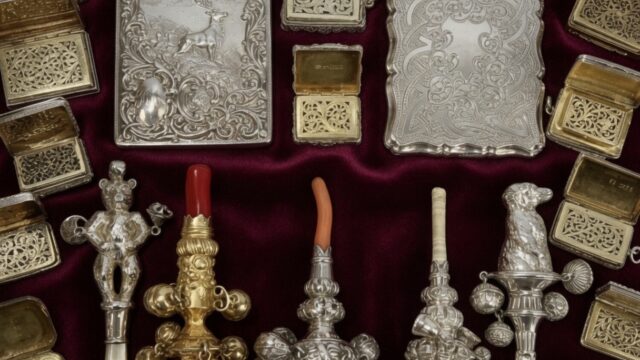
Welsh Sporting Antiques, Welsh Antiques incl. ceramics, Welsh Art Collection Builders (unreserved)
Caerdydd
Maw 4 Awst 2026 10:00 YB
Colwyn Bay Monthly
Bae Colwyn
Arlein yn Fuan